
Table of Contents
- Why Live Brass Bands Transform Weddings
- Brass Band Wedding Reception Cost: What Drives the Price
- How to Hire a Professional Brass Band in 6 Steps
- Brass Band Performance Duration for Weddings
- Questions to Ask Wedding Band Musicians Before Booking
- Acoustic vs. Amplified Brass: Venue Acoustics and Sound Check
- Conclusion
- Frequently Asked Questions
Last Updated: September 23, 2026
Why Live Brass Bands Transform Weddings
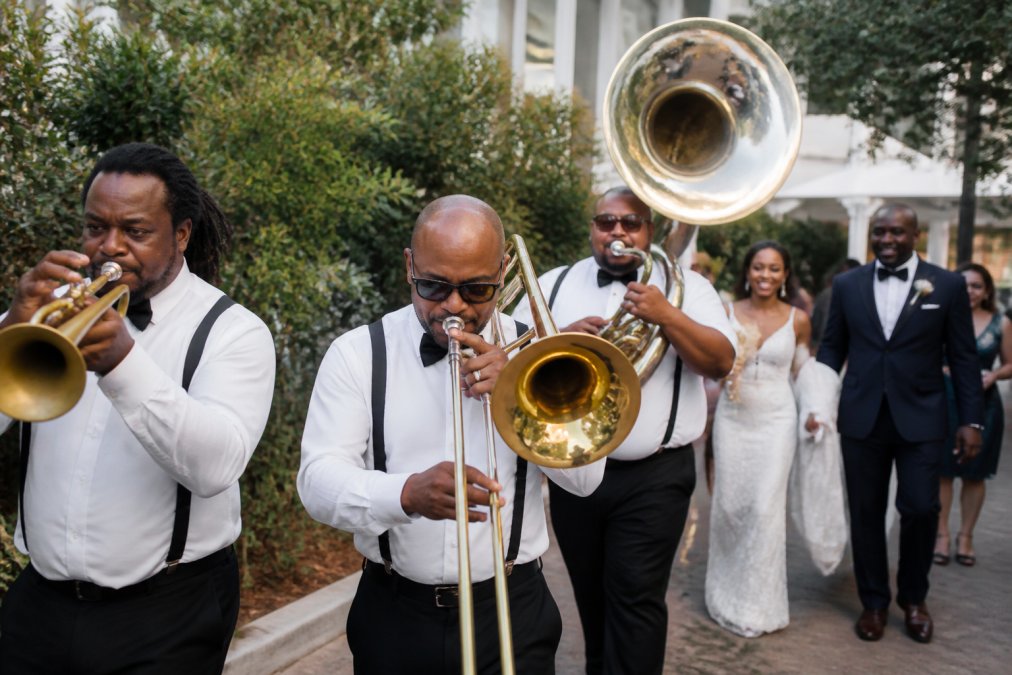
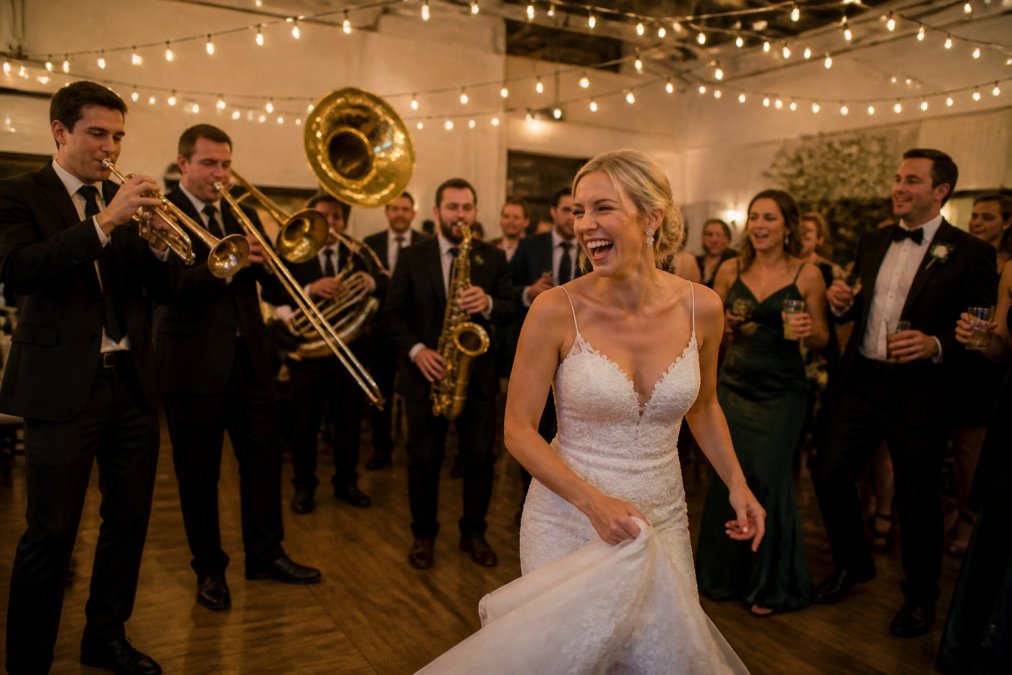
Professional brass band hire for weddings turns a standard reception into an event guests talk about for years. A five-piece ensemble lifts a room the moment it strikes up, and the energy carries through to the last dance.
At New Orleans Music Events, we have spent more than 40 years producing live entertainment for corporate galas, brand activations, and private celebrations.
Here is what makes brass different from a standard wedding band:
- Volume and presence. Brass carries without a PA, reaching every corner of a room.
- Movement. These musicians walk. They lead processions, circle tables, and pull guests into the aisle.
- Flexibility. The same players cover a ceremony processional, a cocktail hour, and a second line.
- Cultural weight. In a New Orleans context, brass means something. It is not background music.
That last point matters more than most couples expect. A brass arrangement signals that the hosts thought about the experience, not just the playlist.
Brass Band Wedding Reception Cost: What Drives the Price
Brass band wedding reception cost depends on four things: ensemble size, travel distance, performance duration, and any technical support the venue requires. Any provider who gives you a flat number before asking about your venue is guessing.
Pricing for live entertainment depends on your date, location, and the scope of production. Request a quote from New Orleans Music Events for figures specific to your event.
Ensemble Size and Instrumentation
A quartet costs less than a seven-piece band because you are paying fewer professional musicians for the same hours. Standard configurations run from a trio (trumpet, trombone, sousaphone) up to a full second-line unit with drums and multiple horns.
The mechanics matter more than the headcount. Each added horn is a separate musician fee, chair, union or non-union rate, and share of the travel and lodging line. A seven-piece does not cost 75% more than a quartet, it often costs closer to double once you stack per-player travel, per diem, and backline.
Larger ensembles give you fuller brass arrangements and more stage presence, but need more space, chairs, and sound check time. If your venue caps the stage footprint, a six-piece with a sousaphone may read bigger than an eight-piece squeezed into a corner.
Travel, Lodging, and Logistics Fees
Travel expenses are the line item couples miss most often. If your venue sits outside the band’s home area, expect mileage, parking, and sometimes overnight lodging for early call times.
Most bands price travel per musician, per vehicle, or as a flat zone fee.
Other cost drivers worth asking about directly:
- Load-in access and union requirements at your venue
- Equipment rental, including a PA system if you want amplification
- Extra sets beyond the contracted performance duration
- Musician insurance and any venue-mandated certificates
- Overtime rate if the reception runs long
- Deposit percentage and when the balance is due
### How to Compare Two Quotes Side by Side
When two quotes land in your inbox, compare these five lines, not the totals:
- Number of musicians on the day, not the number in the promo photo.
- Set length and number of sets, 3 x 45 minutes is not the same as 2 x 60 minutes.
- Travel treatment, flat fee or per-musician reimbursement.
- PA and backline, included, rented, or your responsibility.
- Overtime and cancellation terms, the two clauses that decide your worst-case cost.
What Actually Moves the Number
In practice, the biggest swing factors are date and lead time: a Saturday in peak season with a year of notice prices differently than a Friday in the off-season booked six weeks out. The second is venue access, a load-in with a freight elevator and dedicated staging area costs less in labor than a walk-up with stairs and no parking.
How to Hire a Professional Brass Band in 6 Steps
The hiring process is straightforward once you know the sequence. Most couples start too late, then accept whoever is still free. Start eight to twelve months out for peak wedding season.
Step 1: Define Your Vision and Budget
Write down three things before you contact anyone: guest count, venue, and the moment you want the band to own. A ceremony processional needs different instrumentation than a reception dance block.
Step 2: Review Vetted Acts and Book a Consultation
Ask for performance footage from real private events, not a studio reel. Then ask two questions: how many of those musicians are on your date, and who is the point of contact on the day?
Step 3: Confirm Availability and Lock Your Date
Once you have a band you trust, move fast. Popular ensembles book out a year ahead for Saturday weddings in season.
Ask for the bandleader’s cell number in the contract. On the day, you want to reach the person making decisions, not a booking inbox that closes at five.
Brass Band Performance Duration for Weddings
Brass band performance duration for weddings typically runs 45 to 60 minutes per set, with two to three sets across a reception. Brass players use a lot of air, and embouchure fatigue is real. Short sets with breaks keep the playing sharp.
A common structure looks like this:
| Event Moment | Typical Duration | Notes |
|---|---|---|
| Ceremony processional | 5-10 minutes | Smaller ensemble, often acoustic |
| Cocktail hour | 45-60 minutes | Background volume, roaming optional |
| Reception entrance | 3-5 minutes | Full band, high energy |
| Dance sets | 2-3 sets of 45 minutes | Breaks between for the horns |
| Second line send-off | 10-15 minutes | Guests join the parade |
Why Brass Sets Are Shorter Than a Cover Band’s
A rock or pop cover band can play three hours straight because singers trade off and instrumentalists pace themselves. A brass section cannot. Trumpet and trombone players generate sound with their lips, and the muscles fatigue the same way a sprinter’s legs do. Most working horn players will tell you 45 minutes of full-volume playing is close to the ceiling before tone and intonation slip.
Acoustic vs. Amplified: How It Changes the Schedule
This is the part most hiring guides skip, and it is the single biggest scheduling decision you will make.
- A venue with a decibel cap or a sound monitor
- A reception that also includes a DJ or MC
- A large hall where unamplified brass gets swallowed by the room
Choose acoustic for intimate, character-rich spaces and amplified for large halls or any reception that includes a DJ. If your venue has a decibel cap, amplified brass is the safer call because you can ride the levels.
Working Alongside a DJ or MC
The hybrid reception, brass band plus DJ, is increasingly common, and it works best when the two acts share a schedule instead of competing for the floor.
Sound Check and Curfew Logistics
Ask your venue two questions before you finalize the schedule: when can the band load in, and what time does the music have to stop?
Questions to Ask Wedding Band Musicians Before Booking
Questions to ask wedding band musicians should cover logistics, personnel, and the day-of chain of command. The answers tell you more than any promo video.
Ask these before you sign:
- Who exactly is playing my date? Get names, not “the guys.”
- How long is your sound check, and can you do it before guests arrive?
- Do you carry your own PA system, or do we rent one?
- What is your rain plan for outdoor venues?
- How do you handle a request mid-set?
- Are you insured, and can you provide a certificate to the venue?
- What happens if a musician cancels the morning of?
Acoustic vs. Amplified Brass: Venue Acoustics and Sound Check
Acoustic brass fills a room without any equipment, which suits historic venues, gardens, and spaces with strict sound limits. Amplified brass adds a PA system and microphones, giving you control over balance and volume in a large hall.
Choose acoustic for intimate, character-rich spaces and amplified for large halls or any reception that includes a DJ. If your venue has a decibel cap, amplified brass is the safer call because you can ride the levels.
Conclusion
New Orleans Music Events handles the full production, from brass band selection and custom branding to technical management and day-of coordination, backed by more than 40 years of experience. Learn more about how New Orleans Music Events can build your event from the ground up.
Frequently Asked Questions
How much does it cost to hire a professional brass band for a wedding?
The cost of professional brass band hire for weddings depends on ensemble size, performance duration, travel distance, and date. A solo musician, quartet, or full brass band each carries a different rate. Peak wedding season and holiday weekends also affect pricing. Because every wedding is different, request a personalized price quote from your band or booking agent rather than relying on generic estimates.
How long should a brass band perform during a wedding reception?
Most brass bands perform in sets of 45 to 60 minutes with short breaks, totaling two to four hours of live music. A common structure includes ceremony music, cocktail hour, and a high-energy reception set. Brass band performance duration for weddings can be customized: some couples book a second line parade plus a 90-minute reception set, while others want a full evening of live entertainment.
What questions should we ask wedding band musicians before we book?
Ask about availability, contract terms, deposit amount, and cancellation policy. Confirm the exact instrumentation, repertoire, and whether amplification or a PA system is included. Find out about musician insurance, technical rider requirements, and travel expenses. Also ask how the band handles song requests and whether they can coordinate with your DJ or MC for seamless transitions.
How far in advance should we book a brass band for a wedding?
Book six to twelve months before your wedding date, especially for peak season Saturdays. Popular brass bands and vetted acts fill their calendars quickly. If your date is sooner, contact a booking agent who may have access to additional ensembles. Early booking gives you more time to discuss repertoire, setlist customization, and event logistics with your band.