Table of Contents
- Why High Impact Corporate Engagement Ideas Matter in 2026
- Employee Engagement Activity Examples That Drive Real Results
- Best Practices for Corporate Event Planning That Maximize Engagement
- How to Measure ROI and Success of Corporate Engagement Ideas
- Generational Engagement Strategies for a Multigenerational Workforce
- Implementation Pitfalls to Avoid When Planning Engagement Events
- Conclusion
- Frequently Asked Questions
Last Updated: September 24, 2026
Why High Impact Corporate Engagement Ideas Matter in 2026
Employee engagement is no longer a nice-to-have line item in the HR budget. It is a retention strategy, a productivity driver, and a competitive advantage all at once. According to Gallup’s State of the Global Workplace report, the majority of employees worldwide remain disengaged at work, and those disengagement levels carry real costs in turnover, absenteeism, and lost output.
Employee Engagement Activity Examples That Drive Real Results
The engagement activities that produce measurable gains share one trait: they create a shared experience employees cannot get from a video call. Here are the formats that consistently outperform.
Live Music and Cultural Experiences
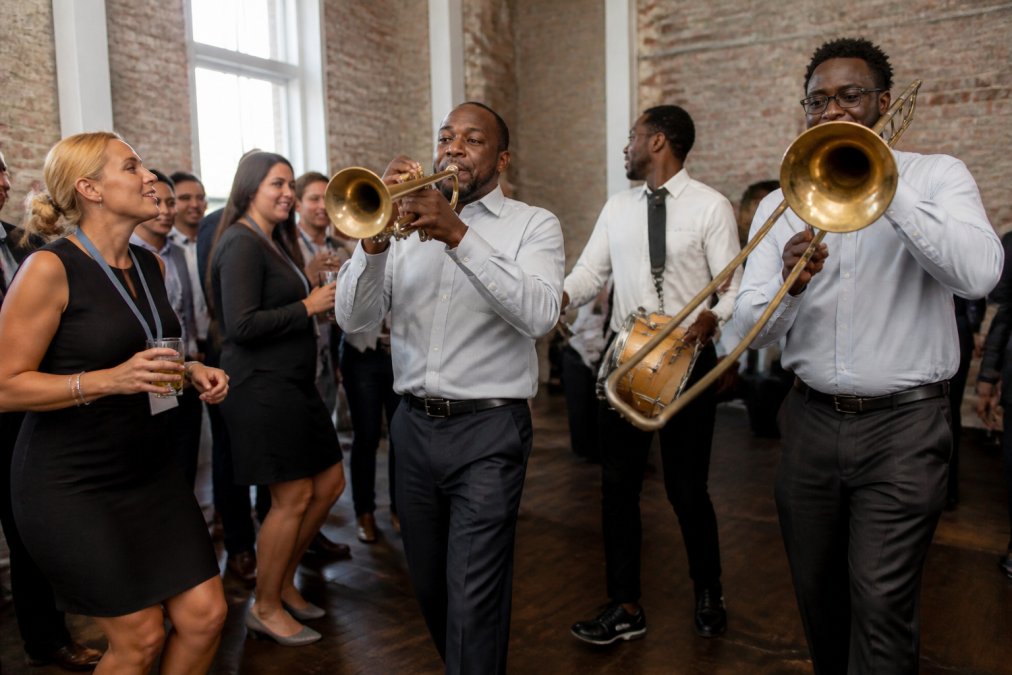
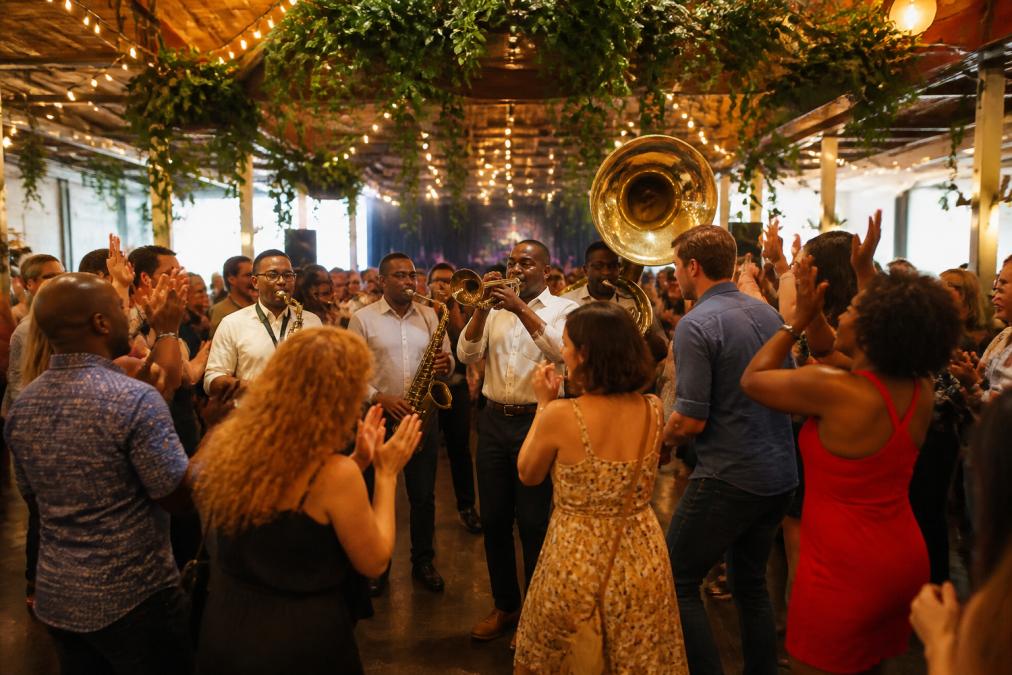
Live entertainment transforms a standard corporate gathering into something employees talk about for months. A brass band leading a second-line parade, a jazz trio at a reception, or a themed cultural showcase tied to your milestones creates the emotional peak that drives recall and connection.
Volunteer and CSR Initiatives
Corporate social responsibility programs build pride and purpose, two engagement drivers that pay off in retention. Common approaches:
- Company-wide volunteer days with paid time off
- Matching gift programs for employee donations
- Volunteer grants that reward hours with charitable contributions
- Skills-based volunteering that lets employees apply professional expertise
Pair your CSR initiative with a live cultural element. A volunteer kickoff featuring local musicians turns a routine sign-up drive into an event people remember, and participation rates climb when the launch feels like a celebration rather than a memo.
Best Practices for Corporate Event Planning That Maximize Engagement
Strong corporate event planning starts with a clear purpose. Before booking anything, define what you want employees to feel and do. A team-building event should strengthen relationships; a recognition gala should celebrate specific achievements. A vague goal produces a vague event.
A few practices separate excellent events from average ones:
- Involve employees early. Pulse surveys and feedback sessions tell you what your team actually wants, not what leadership assumes.
- Design for interaction. Passive spectatorship kills engagement. Live music, interactive cultural experiences, and hands-on activities keep people present.
- Respect the calendar. Avoid stacking events during peak workload periods. A well-attended event beats a poorly attended one.
- Handle logistics like a production. Load-in schedules, venue coordination, and technical setup are where amateur events fall apart. Professional production management removes that risk.
Budget-Specific Segmentation for Every Team Size
Not every company can fund a stadium concert, and that is fine. Engagement scales with creativity, not just spend.
| Team Size | Recommended Focus | Format Examples |
|---|---|---|
| Under 50 | Intimacy and connection | Small-group cultural outings, lunch-and-learn performances |
| 50-250 | Shared experience | Themed receptions with live music, department-level celebrations |
| 250-1,000 | Scale and spectacle | Full-company gatherings with headline entertainment |
| 1,000+ | Multi-venue coordination | Conference-wide cultural programming across sessions |
How to Measure ROI and Success of Corporate Engagement Ideas
Measurement is where most engagement programs fall short. Competitors list ideas; almost none show you how to prove the spend was worth it. This section does.
Start With a Baseline, Not a Post-Mortem
You cannot calculate ROI without a “before” number. Two to four weeks before the event, capture:
- Current engagement score from your existing pulse survey tool (Gallup Q12, Culture Amp, Lattice, or a simple 5-question internal form all work).
- Trailing 12-month voluntary turnover rate for the team or department attending.
- Trailing 12-month absenteeism or unplanned PTO rate for the same group.
- Manager-reported team sentiment on a 1-5 scale, collected in a single Slack or Teams poll.
The ROI Formula Most HR Teams Never Write Down
ROI = (Retained Value + Productivity Gain − Program Cost) ÷ Program Cost
Where:
- Retained Value = (Baseline turnover rate − Post-event turnover rate) × Average fully loaded cost to replace one employee × Headcount. Industry-standard replacement cost is commonly cited at 50-200% of annual salary depending on role seniority, per SHRM’s turnover-cost guidance.
- Productivity Gain = Estimated reduction in unplanned absence days × Average daily loaded cost per employee, plus any manager-reported output lift you can defend.
- Program Cost = Venue, entertainment, production, catering, staff time, and any travel, not just the invoice for the band.
A Practical Scorecard You Can Build in One Afternoon
| Metric | Type | When to Collect | Target Signal |
|---|---|---|---|
| Attendance / participation rate | Leading | Day of event | 70%+ of invited headcount |
| Post-event pulse score | Leading | 24-48 hours after | +0.5 points vs. baseline |
| 90-day retention of attendees | Lagging | Quarter close | At or above non-attendee rate |
| Voluntary turnover (12-mo rolling) | Lagging | Quarterly | Flat or declining |
| eNPS shift | Lagging | Next survey cycle | +5 points or better |
| Manager sentiment score | Lagging | 30 days after | No decline |
Build the scorecard before you book the venue. Deciding what success looks like after the event is how programs get cut at the next budget cycle, finance teams can smell retrofitted metrics.
Presenting Results to Finance Without Getting Cut
Finance teams respond to trends and comparisons, not anecdotes. Three moves that work:
- Compare attendees vs. non-attendees. Even a modest retention delta between the two groups is a defensible story.
- Show cost per engaged employee. Divide total program cost by the number of employees who reported a positive experience. This number is often far lower than leaders assume.
- Tie one metric to a business outcome. If your sales team’s Q3 quota attainment rose after a recognition event, say so, with the caveat that correlation is not causation, and note what else changed.
The Cost-Segmentation Angle Competitors Skip
ROI expectations should scale with spend. A $0-cost lunch-and-learn should be judged on participation and sentiment, not turnover. A six-figure gala should be judged on retention and productivity. Set the bar before the event by budget tier:
- Under $5K total: Measure participation and pulse score only.
- $5K-$50K: Add 90-day retention of attendees.
- $50K+: Add rolling turnover, eNPS, and a manager-reported productivity check.
Skipping post-event measurement is the most common mistake in engagement planning. Without data, every future budget conversation becomes a subjective argument, and programs get cut first when budgets tighten. The fix is not more surveys, it is fewer, better-timed ones tied to a number finance already tracks.
What “Good” Looks Like
Most practitioners find a well-run engagement program produces a 3-8 point lift in pulse scores within 30 days, and measurable retention improvement only after two to three consecutive quarters of consistent programming. If you see a 20-point jump after one event, check your methodology before celebrating.
Generational Engagement Strategies for a Multigenerational Workforce
A single event format will not resonate equally across four generations. Tailoring your approach matters.
- Gen Z and younger millennials respond to experiences they can share, so photo-friendly moments and social-ready cultural elements matter.
- Gen X values authenticity and substance. They notice when an event feels forced or performative.
- Baby boomers often appreciate tradition, recognition, and well-organized gatherings that respect their time.
Implementation Pitfalls to Avoid When Planning Engagement Events
Even well-intentioned programs fail for predictable reasons. The difference between a program that compounds and one that quietly dies is usually not budget, it is whether planners diagnosed these failure modes before the event, not after.
Pitfall 1: Forced Fun Syndrome
The most common reason engagement events backfire is that they are designed around what leadership finds fun, not what employees want. Symptoms include mandatory attendance, cringe-inducing icebreakers, and themes imported from a 2015 corporate retreat.
Pitfall 2: The One-and-Done Trap
A single event does not fix a culture. Engagement is a rhythm, not a moment. Companies that see durable gains run a cadence: one anchor event per quarter, one smaller touchpoint per month, and continuous recognition in between.
Pitfall 3: Underestimating Production Logistics
Multi-venue events, union load-in windows, sound ordinances, and tight changeover schedules are where amateur planning collapses. A brass band that needs a 90-minute load-in cannot follow a keynote that ends 15 minutes before doors open.
Pitfall 4: Ignoring the Hybrid Workforce
If remote employees are excluded entirely, your engagement gains are limited to those who attend in person, often a minority in 2026. Streaming a keynote is not engagement; it is broadcast.
Pitfall 5: Measuring Nothing, Then Defending Everything
Programs without data get cut first when budgets tighten. If you cannot show a retention or sentiment trend, your next request becomes a subjective argument you will lose.
Pitfall 6: Bolting On Culture Instead of Building It In
The pattern across all six pitfalls is the same: engagement fails when it is designed for the planner’s comfort rather than the employee’s experience. Diagnose before you book, measure after you deliver, and build a rhythm instead of a moment.
At New Orleans Music Events, we have seen how quickly a poorly produced event erodes trust, and how a seamless one builds it. That is why we handle decor, technical management, and custom branding as part of a complete production package rather than leaving clients to coordinate vendors themselves.
Conclusion
The challenge is not finding engagement ideas. It is choosing the ones your team will remember and proving they were worth the investment. With more than 40 years of experience producing immersive cultural experiences, New Orleans Music Events brings live music, brass bands, custom branding, and full-service event production to corporate gatherings of every size.
Frequently Asked Questions
What are some unique high-impact engagement ideas for corporate events?
Unique high-impact corporate engagement ideas include immersive cultural experiences like live brass bands, interactive volunteer grants where teams choose charities, gamified pulse surveys with real-time leaderboards, and milestone celebrations tied to company values. These go beyond standard happy hours by creating emotional connections and shared memories. For example, a corporate conference featuring a custom-branded live music performance can boost employee morale and retention while reinforcing workplace culture.
How do you measure the success of corporate engagement initiatives?
Measure success through pre- and post-event pulse surveys and participation rates. Compare engagement scores before and after initiatives to understand impact. Best practices for corporate event planning include setting baseline metrics.
How can live entertainment improve corporate event engagement?
Live entertainment, such as a New Orleans-style brass band, transforms passive attendees into active participants. It creates a shared experience that boosts team cohesion and employee morale. Live music also increases dwell time and social sharing, amplifying your brand activation. For large conferences, professional entertainment can break the ice and make networking feel natural. Choose culturally immersive acts that align with your theme to maximize impact.
What are the top 5 employee engagement activities for large teams?
Top activities for large teams include: 1) Themed team-building events with live music, 2) Volunteer days with matching gift programs, 3) Professional development workshops like lunch and learns, 4) Gamified wellness challenges, and 5) Milestone celebrations with custom branding. These employee engagement activity examples work because they scale easily and appeal to diverse interests. Rotate activities quarterly to maintain excitement and address different engagement drivers.