Last Updated: October 23, 2026
Quick Summary
Authentic cultural experiences for corporate guests are planned, locally rooted activities that connect attendees to a destination’s people, art, food, and music through direct participation rather than passive observation. The test for authenticity is whether a local resident would recognize the programming as their own culture, performed by their people, on their terms.
- Book private, after-hours, or guided-access tours instead of standard admission for corporate groups.
- Pay artisans professional rates and credit them by name in your event program.
- Brief entertainment providers on the run of show, not just the genre, so music marks transitions.
- Model five cost drivers before requesting quotes: group size, practitioner fees, production, venue access, and transport.
- Define at least three participation roles: active participation, guided observation, and learning.
Table of Contents
- Why Authentic Cultural Experiences Matter for Corporate Events
- New Orleans Corporate Event Ideas That Showcase Local Culture
- Live Music for Corporate Events: Beyond Background Noise
- Culturally Respectful Event Planning: A Practical Framework
- Corporate Event Entertainment Ideas for Every Group Size
- Budgeting and Measuring the Impact of Cultural Programming
- Accessibility and Inclusive Participation in Cultural Activities
- Frequently Asked Questions
Why Authentic Cultural Experiences Matter for Corporate Events
Authentic cultural experiences for corporate guests are planned, locally rooted activities that connect attendees to a destination’s people, art, food, and music through direct participation rather than passive observation.
That distinction matters because attendees can tell the difference immediately. A ballroom with beads on the tables reads as decoration.
Below, we break down what separates genuine cultural programming from tokenism, plus specific ideas, a planning framework, and the budgeting and accessibility questions most guides skip.
The test for authenticity is simple: would a local resident recognize this as their culture, performed by their people, on their terms? If the answer is no, it is theming, not culture.
New Orleans Corporate Event Ideas That Showcase Local Culture
The strongest corporate event ideas in New Orleans share one trait: they put guests inside the culture instead of in front of it. That means private access, working artists, and formats that invite participation.
Cultural Attractions and Private Tours
Book private, after-hours, or guided-access tours rather than standard admission. Small-group walking tours through historic neighborhoods, museum and gallery visits led by curators, and theater or rehearsal hall access give corporate guests context that a self-guided visit cannot.
Creative Workshops with Local Artisans
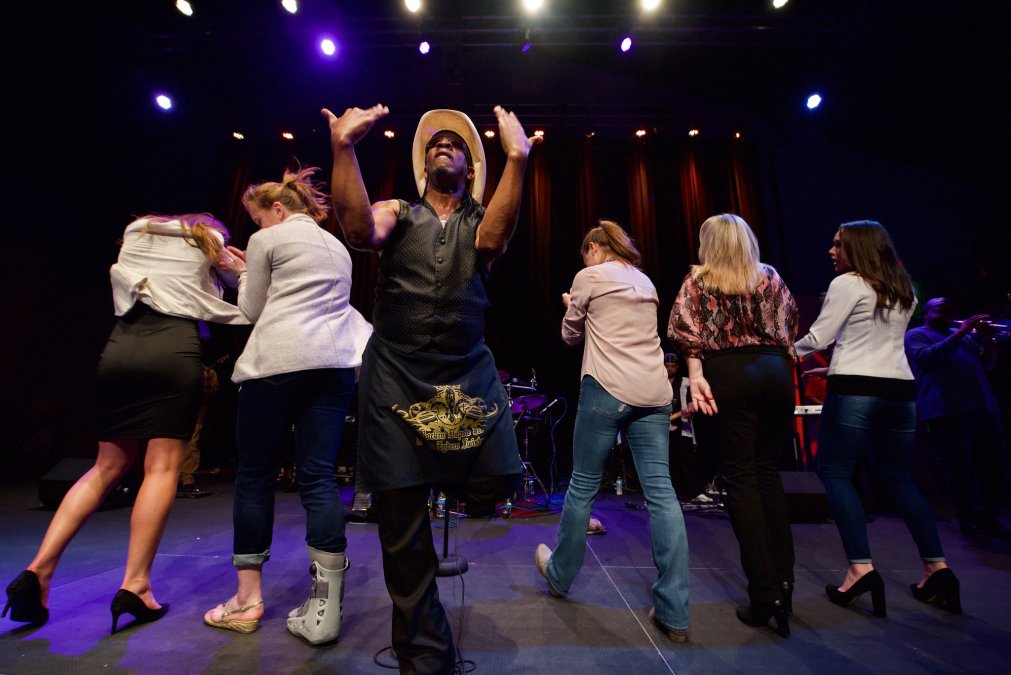
Hands-on sessions with working craftspeople turn attendees into participants. Consider workshops in cooking, mixology built around local spirits, percussion, or craft traditions led by artists who make their living from the work. Pay artisans professional rates and credit them by name in your program.
Live Music for Corporate Events: Beyond Background Noise
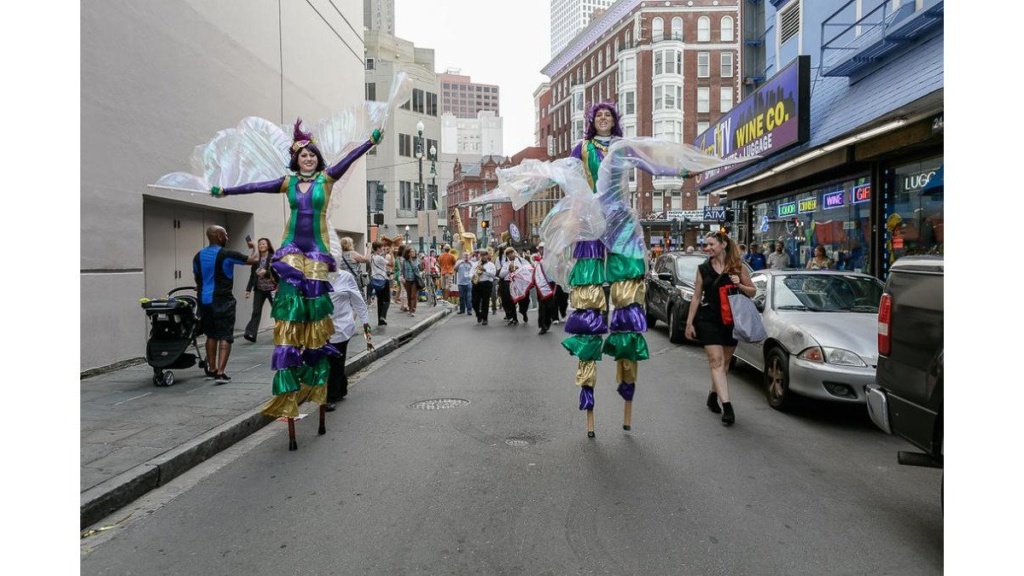
Live music for corporate events works best as programming, not wallpaper. A brass band that leads a procession, a second line that moves guests between venues, or a set built around the host city’s musical history does more for engagement than a playlist ever will.
What most planners miss is the sequencing. Music should mark transitions: arrival, dinner, the moment the award is announced. Brief your entertainment provider on the run of show, not just the genre.
If your group is large or moving between venues, confirm load-in access, power, and sound limits with each space in advance. OSHA event safety guidance is a useful reference for crowd management and staging considerations.
Culturally Respectful Event Planning: A Practical Framework
Culturally respectful event planning means securing consent, paying fairly, crediting properly, and letting local practitioners lead. Use this four-step framework before you book anything:
- Identify who owns the tradition. Determine whether the activity belongs to a specific community, and ask that community’s organizations who should deliver it.
- Get consent in writing. Confirm the format, the context, and any restrictions the practitioners set. Respect a no.
- Pay professional rates. Artists and culture bearers are professionals. Budget for their time, travel, and materials.
- Credit and contextualize. Name performers and artisans in your program and explain the tradition accurately, in their words where possible.
The most common mistake is booking a cultural performance as “ambiance” without briefing the performers on your audience or asking what they need. Groups that skip this step get a disconnected set, awkward staging, and a program that reads as extraction rather than partnership.
Corporate Event Entertainment Ideas for Every Group Size
Corporate event entertainment ideas should scale with the room, not the budget alone. Match format to headcount:
| Group Size | Best Formats | Planning Notes |
|---|---|---|
| Under 50 | Private tours, artisan workshops, seated dinner sets | High interaction, easy to brief |
| 50-200 | Processional bands, trivia and game formats, gallery receptions | Confirm sound limits per venue |
| 200-500 | Second line parades, staged performances, food and music pairings | Stagger load-in and guest flow |
| 500+ | Multi-venue programs, parade routes, large ensemble staging | Build in buffer time between spaces |
For multi-venue programs, map the walking route and load-in windows first, then build the entertainment around them. Games and trivia contests work well as connective tissue between larger moments.
Budgeting and Measuring the Impact of Cultural Programming
Most guides treat cultural programming as a line item to be quoted and a satisfaction score to be reported. That is not a budget and it is not measurement. A defensible plan separates the cost drivers you control from the ones you do not, and it ties spend to outcomes your finance team and your executive sponsor already care about.
The five cost drivers to model before you request a quote
Every cultural experience price is built from the same inputs. Model them yourself first so you can read a proposal critically:
- Group size and format. A seated workshop for 30 and a processional performance for 300 use entirely different labor and equipment. Per-guest cost typically falls as headcount rises, but only until you cross a venue capacity or staging threshold, at which point it climbs again.
- Practitioner fees and time. Artists, guides, and culture bearers are paid for rehearsal, travel, setup, performance, and breakdown, not just the visible hour. Ask providers to show practitioner time as its own line.
- Production and audio-visual scope. Sound reinforcement, staging, lighting, power distribution, and load-in labor scale with venue constraints, not with your ambition. A historic space with no freight elevator can double production labor.
- Venue and access costs. Private or after-hours access, permits, security, and cleaning fees are frequently quoted separately and are the most common source of overrun.
- Transport and guest flow. Shuttles, route management, and buffer time between venues are real costs, and multi-venue programs multiply them.
Build your budget as separate lines for practitioner fees, production and AV, venue and permits, transport, food and beverage, and a contingency reserve. A common pattern is to hold a contingency of roughly ten to fifteen percent of the programming subtotal for venue-driven surprises; confirm the figure with your finance team rather than adopting it blindly.
Ask every provider to itemize talent, equipment, and management separately. A single all-in number cannot be defended internally, and it hides the practitioner fee you most need to protect.
Measuring outcomes, not just memories
Memorability is the easiest thing to measure and the least useful. Build a small evaluation plan before the event so you are not reverse-engineering a story afterward:
- Define two or three objectives up front. Examples: cross-functional connection, cultural learning, or guest satisfaction among a specific attendee segment. Write them down before booking.
- Capture participation, not just attendance. Count how many guests joined an interactive session, asked a question of a guide, or stayed through a performance. Participation rates separate programming that worked from programming that merely happened.
- Use a short post-event survey with cultural-specific items. Ask whether guests understood something about the local community they did not know before, and whether the experience felt respectful rather than staged. Keep it to a handful of questions so response rates hold.
Report results to your executive sponsor in the language they use: connection, retention, guest satisfaction, and brand perception. A cultural program that cannot be tied to one of those is a cost, not an investment.
U.S. Bureau of Labor Statistics data on arts and entertainment employment offers useful context on the scale of the creative workforce your spend supports, which can strengthen the internal case for community-rooted programming.
Accessibility and Inclusive Participation in Cultural Activities
Accessibility is not a checklist you run at the venue walk-through. It is a design constraint that shapes which cultural formats you can book in the first place. A second line parade through uneven streets and a seated artisan workshop can both be inclusive, but only if you plan the participation paths before you sign the contract.
Design multiple ways in
The strongest cultural programming offers guests more than one role. For every experience, define at least three:
- Active participation, dancing, playing an instrument, cooking, or making something with your hands.
- Guided observation, a seated vantage point, a narrated context, or a host who explains what is happening.
- Learning, a Q&A with the practitioner, a printed or digital program, or a short pre-event briefing.
Guests who use a wheelchair, guests who are hard of hearing, guests who do not drink, and guests who are neurodivergent all need a role that does not require them to opt out of the room. Build those roles into the run of show rather than improvising them on site.
The practical checklist
Mobility and physical access. Confirm step-free routes from drop-off to every space guests will use, including restrooms.
Sensory considerations. Amplified music, crowds, and unfamiliar spaces can overwhelm some guests.
Dietary and beverage needs. Collect dietary requirements at registration, not at the plate.
Language access. For national conferences, provide translated programs and captioning or interpreters where the format allows.
Neurodiversity and cognitive access. Clear signage, a written run of show, and advance notice of loud or sudden moments (a brass entrance, a parade start) let guests prepare.
The most common failure is treating accessibility as a venue question alone. A fully accessible venue still fails if the program gives guests only one way to participate, or if staff are not briefed on the quiet space and the sensory plan.
ADA National Network guidance on accessible events is a practical starting point for evaluating venues and confirming your obligations, and it is worth reviewing before the first site visit rather than after the contract is signed.
Frequently Asked Questions
What are some examples of cultural activities for corporate guests?
Cultural activities for corporate guests can include private museum tours, art gallery visits, live music performances by local artists, hands-on creative workshops led by artisans, and guided food tastings featuring regional cuisine. In New Orleans, options also include brass band parades, second-line dance experiences, and historical walking tours of the French Quarter. The key is to choose activities that are interactive and led by local experts, so guests engage with the culture rather than just observe it.
How can a corporate event feel authentic to local culture?
Authenticity comes from direct partnerships with local artists, musicians, and cultural organizations. Instead of importing generic entertainment, work with local performers who can share the stories behind their craft. Incorporate regional cuisine, use local venues with historical significance, and give guests opportunities to participate in traditions rather than just watch. New Orleans Music Events, for example, has over 40 years of experience connecting corporate groups with authentic local music and cultural experiences, ensuring the event reflects the city’s spirit.
How can event planners make cultural programming respectful and inclusive?
Respectful programming starts with consent and collaboration. Consult with local cultural leaders and artists about how their traditions are presented, avoid reducing culture to stereotypes or token gestures, and ensure activities are accessible to all attendees regardless of physical ability. Provide context so guests understand the significance of what they’re experiencing. Culturally respectful event planning also means fairly compensating local partners and being transparent about how their culture will be represented.
How do you incorporate live music into a corporate event?
Live music works best when it’s integrated into the event’s flow rather than treated as an afterthought. For a corporate reception, a local jazz trio can set the tone during networking. For a gala, a full brass band can drive the energy during key moments. Consider having musicians interact with guests, explain the history of the music, or lead a second-line parade. Work with a production team to handle audio-visual needs and scheduling so the music enhances rather than disrupts the program.
What are some ways to help corporate guests engage with local traditions?
Encourage hands-on participation: invite guests to join a drum circle, learn a few dance steps, or try local crafts in a workshop. Arrange for local storytellers or historians to share context before activities. Use interactive games and trivia contests that highlight local culture. Offer private tours that go beyond surface-level sightseeing. Providing a brief cultural orientation before the event can also help guests feel more comfortable and curious about participating respectfully.
How do you budget for authentic cultural experiences at a corporate event?
Budgeting for cultural experiences should account for artist fees, venue rental, materials for workshops, and any production support like audio-visual equipment. Costs vary widely based on group size, duration, and the level of customization. Instead of cutting corners on local partnerships, allocate a realistic portion of your overall event budget to ensure fair compensation and high-quality experiences. Request detailed quotes from vendors and be transparent with your finance team about the value these experiences bring to attendee satisfaction and engagement.
Planning a corporate gathering where the culture has to feel real, not rented? That is the problem we solve. New Orleans Music Events brings more than 40 years of production experience, full-service event management from decor to technical support, custom branding for entertainment elements, and deep relationships with local musicians and culture bearers. Get started with New Orleans Music Events and give your guests a program the city itself would recognize.
