Table of Contents
- Why Stereotypical New Orleans Event Themes Fall Flat
- The Clichés to Retire: Beads, Hurricanes, and Fake Voodoo
- Authentic New Orleans Corporate Event Ideas That Hold Up
- A Framework for Choosing New Orleans Event Theme Ideas
- Culturally Respectful Event Planning: A Practical Checklist
- New Orleans Live Music for Corporate Events, Done Right
- Executing the Theme Across Decor, Food, and Programming
- Conclusion
- Frequently Asked Questions
Last Updated: October 17, 2026
Why Stereotypical New Orleans Event Themes Fall Flat
Most New Orleans event themes fail for one reason: they treat a living culture as a costume.
Beads, hurricanes, and plastic masks are easy to buy, and the fastest way to tell a room that nobody did any homework. At New Orleans Music Events, we have produced cultural programming for corporate clients for more than 40 years.
The problem is not that beads and Bourbon Street imagery are offensive. It is that they are flat, reducing a city with a deep musical and culinary history to a few props.
A stereotypical New Orleans event theme is any concept that copies surface-level tourist imagery instead of drawing on the city’s actual traditions, communities, and artists. That distinction matters for planners because it changes what you book, who you hire, and how guests experience the night.
Below, we break down which clichés to retire, offer authentic New Orleans corporate event ideas, and give you a framework for choosing new orleans event themes that hold up.
The test is simple: if your theme could be assembled from a party supply catalog, it is a stereotype. If it requires local artists, musicians, or cooks, it is a theme worth building.
The Clichés to Retire: Beads, Hurricanes, and Fake Voodoo
Start by retiring the props that carry no meaning.
- Plastic bead giveaways. Throwing beads is tied to specific parade traditions. Handing them out at a conference reception turns a cultural practice into a novelty.
- Hurricane cocktail bars. A sweet rum drink does not represent a city’s food culture, and alcohol-centered branding narrows your audience.
- Fake voodoo altars and skull props. These borrow from spiritual practices that are still observed. Treating them as decor is where cultural neglect becomes obvious to guests.
- Bourbon Street signage and neon cutouts. The French Quarter is one street corner of a much larger city.
- “Laissez les bons temps rouler” on every surface. One sign is fine. Twelve is a signal that you ran out of ideas.
The real cost here is credibility. When a visiting executive sees a fake altar next to a bead station, they read it as a planning shortcut. That reflects on your brand, not the city.
Authentic New Orleans Corporate Event Ideas That Hold Up
Authentic New Orleans corporate event ideas start with real traditions rather than tourist imagery. The strongest concepts share one trait: a local artist, musician, or food tradition sits at the center, and everything else supports it.
Here is what separates a real concept from a themed one:
- A named local tradition grounds the concept, such as second-line parades or jazz funerals.
- Working artists replace props. You hire musicians and cooks, not decor rentals.
- A story your guests can retell after they fly home.
Numbered Theme Concepts Built on Real Local Traditions
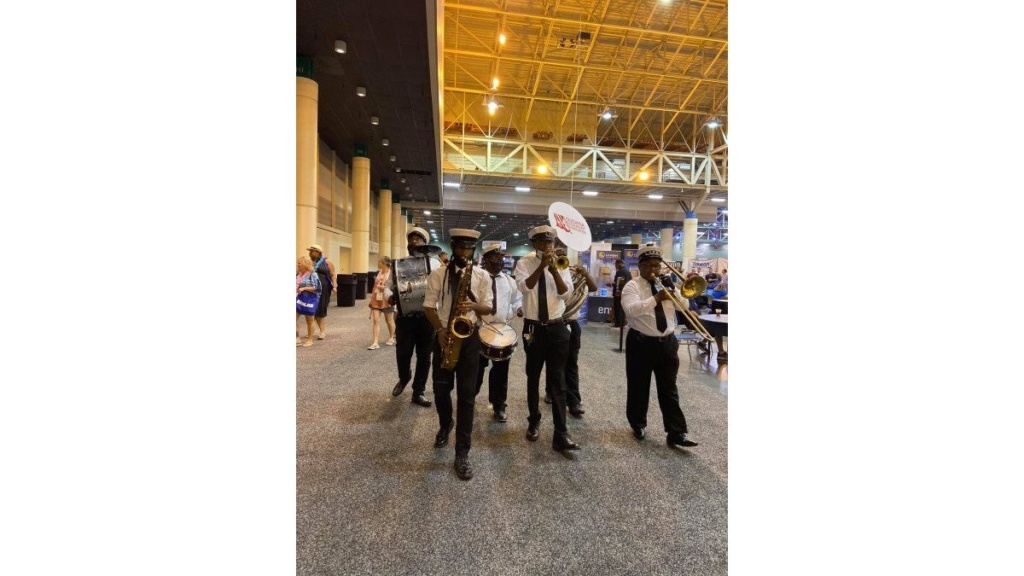
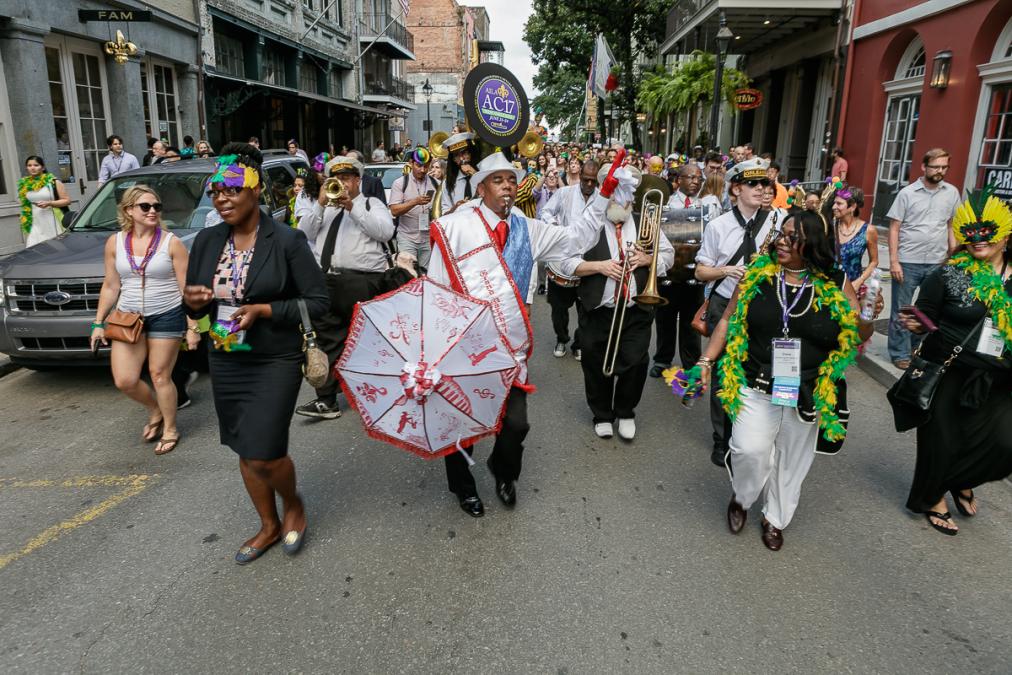
- Second-Line Procession. A brass band leads guests through the venue in a traditional parade format. Guests join the line rather than watch it. This works well for conference kickoffs and team celebrations.
- Jazz Club Evening. A seated listening room with a small combo, low lighting, and no dance floor pressure. Best for galas and awards dinners where conversation matters.
- Gospel and Brass Brunch. A daytime event built around choir music and local brunch dishes. Strong for family-friendly and alcohol-free programming.
- Mardi Gras Indian Tribute. Honor the masking and beading traditions of local tribes with a presentation and a commissioned piece, not costume rentals. Requires direct community consultation.
- Neighborhood Food Tour, Indoors. Stations built around distinct local food traditions rather than a generic “Cajun buffet.” Best for product launches with a walkable floor plan.
- Songwriter Round. Three local writers perform and tell the stories behind their songs. Excellent for small executive dinners and client hosting.
Booking a tribute without involving the community it comes from turns a meaningful tradition into a costume show, and guests from the region will notice immediately.
A Framework for Choosing New Orleans Event Theme Ideas
Most planners do not need another list of theme ideas. They need a repeatable way to tell a real concept from a decorated cliché before money is committed.
Step 1: Name the tradition in one sentence. Write down the specific local practice your theme draws on. “A second-line procession led by a brass band” is a tradition; “a New Orleans party” is a vibe.
Step 2: Identify the local partner at the center. Every authentic theme needs a named musician, artist, chef, or community group who owns the cultural content, not a rental company or a national agency with a regional catalog.
Step 3: Run the stereotype audit. Score the concept against the five questions below. Two or more “yes” answers mean the concept needs rework before you book anything.
| Audit Question | What a “Yes” Looks Like | Why It Fails |
|---|---|---|
| Could this theme work in any city with the name swapped? | Generic “party city” decor, beads, neon signs | The theme carries no local specificity |
| Is a sacred or spiritual practice used as decor? | Fake altars, skull props, costume masking | Living traditions are treated as props |
| Are costumes standing in for a cultural group? | Guests dressed as “voodoo priests” or “Mardi Gras Indians” | Costuming a culture is the clearest stereotype signal |
| Is alcohol the only draw? | Open bar as the headline, no programming anchor | Narrows the audience and flattens the theme |
| Would a local guest recognize this as real? | Locals would wince, not nod | The people closest to the culture are the best test |
Step 4: Match the theme to the audience, not the mood board. Check start time, alcohol presence, accessibility, guest mix, and whether the anchor moment works for the room.
A theme that survives all five steps will be the only event your guests describe on the flight home. The trade-off is real: you are moving money from decor to people.
Culturally Respectful Event Planning: A Practical Checklist
Culturally respectful event planning means involving the communities your theme represents, paying local artists properly, and cutting any element that turns a living practice into a prop. Run this checklist before signing vendor contracts.
- The concept names a specific local tradition, not a generic vibe
- At least one local artist, musician, or chef is contracted, not a rental company
- Sacred or spiritual imagery is excluded from decor entirely
- Costumes are not used to represent cultural groups
- Local performers are paid at professional rates
- A community contact reviewed the masking or parade elements
- The event includes a non-alcoholic option at every station
- Seating and sightlines work for guests with mobility needs
- Programming includes at least one quiet space
- Music volume and timing are set for the audience, not the vendor
Build the alcohol-free option into the theme itself, not as an afterthought. A gospel brunch or a songwriter round gives non-drinking guests a real experience instead of a soda at the bar.
New Orleans Live Music for Corporate Events, Done Right
New Orleans live music for corporate events works when the band is booked as programming, not background noise. The difference shows up in the room within minutes.
- Match the band to the room. A six-piece brass band overwhelms a 40-person dinner. A trio disappears in a hotel ballroom.
- Set the set list with the audience in mind. Instrumental jazz for a networking hour, high-energy brass for a procession.
- Plan the sound before the day of the event. Ballroom acoustics and load-in schedules need to be settled well before guests arrive.
- Skip the audience participation gimmicks. Real musicians create the energy. You do not need a hype person with a microphone.
If your theme needs custom branding woven into the entertainment, design it early. Logos on a backdrop are not branding; branding is a moment built into the performance.
Executing the Theme Across Decor, Food, and Programming
Execution is where good themes quietly fall apart. A concept that reads well in a proposal can collapse if decor, food, music, and programming pull in different directions.
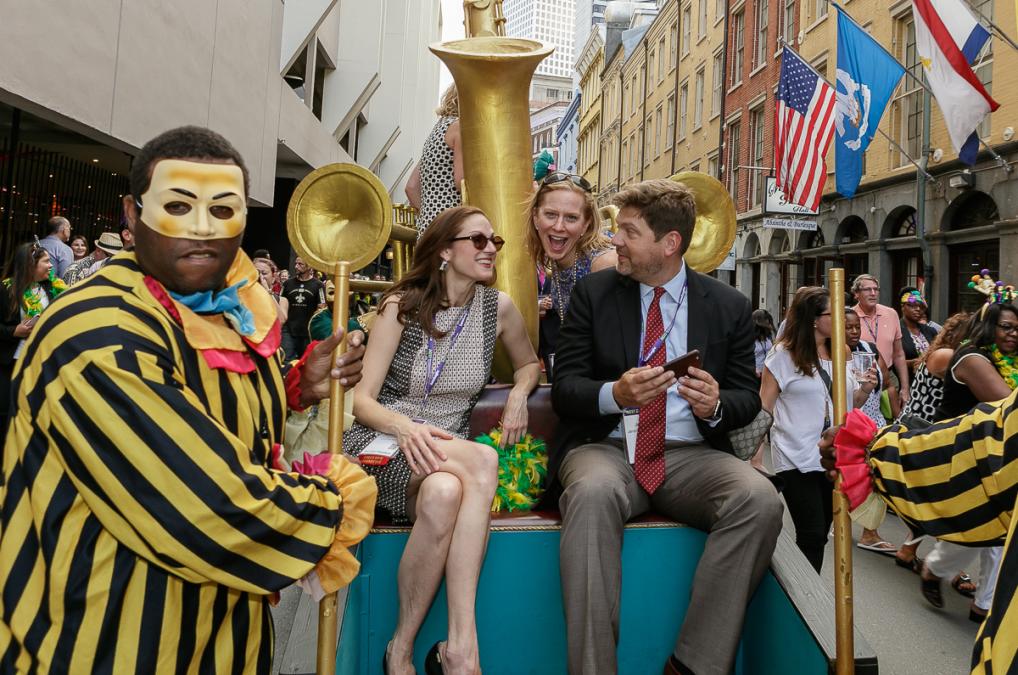
Decor: choose restraint and commission one piece. Warm lighting, local art, and a single commissioned piece beat a room full of themed props every time.
Food: build stations around distinct traditions, not one blended buffet. A generic “Cajun buffet” flattens several distinct food traditions into one label.
Programming: give the theme one anchor moment and let the rest breathe. A procession, a performance, or a songwriter round gives the evening a center of gravity. Everything else supports it.
| Track | What to Brief | Common Failure | Fix |
|---|---|---|---|
| Decor | One commissioned piece plus restraint | Prop-heavy room that reads as a party store | Cut anything reusable at a Halloween party |
| Food | Named dishes at distinct stations | Generic “Cajun buffet” label | Label accurately and add a non-alcoholic signature drink |
| Music | Live band as programming | Band treated as background noise | Set the set list to the audience and settle sound early |
| Programming | One anchor moment | Details with no center | Rehearse the anchor moment and time it |
A commissioned piece with no lighting, a band with no sound plan, or an anchor moment with no rehearsal will read as a shortcut even when the concept is right.
Authenticity is not a decor decision. It is a production decision, and it requires a team that knows the local music and cultural landscape well enough to book it correctly and coordinate all four tracks on one schedule.
Conclusion
The hard part of avoiding stereotypical new orleans event themes is not knowing which props to cut. It is finding local artists, musicians, and partners who can carry a real tradition from concept to showtime, on schedule, in a venue with union load-in rules and a firm start time.
That is the work we do. New Orleans Music Events brings more than 40 years of local production experience, full-service event production across music, decor, and technical management, custom branding built into the entertainment itself, and entertainment matched to your theme and audience. Get started with New Orleans Music Events and build an event your guests will still be describing on the flight home.
Frequently Asked Questions
How do you plan a New Orleans-themed event without using stereotypes?
Build the theme around real local traditions rather than tourist shorthand. Choose one authentic anchor, such as a second-line parade, a jazz brunch, or a neighborhood food story, and let the decor, music, and menu follow from it. Skip beads, plastic masks, and fake voodoo props. Bring in local musicians and, where possible, a local cultural consultant so the details are accurate. The test is simple: would a New Orleans resident recognize this as their city, or as a souvenir shop version of it?
What are authentic alternatives to a Mardi Gras-themed event?
Several strong alternatives exist. A second-line parade theme centers on brass bands and social aid and pleasure club traditions. A jazz brunch theme draws on the city’s live music and food culture. A neighborhood food story theme can highlight Creole and Cajun cooking without costume props. A French Quarter architecture and history theme works well for seated galas. Each of these gives guests a real cultural anchor while avoiding the bead-and-mask clichés that read as superficial to anyone who lives there.
Should you hire local musicians for a New Orleans-themed corporate event?
Yes, and it is the single fastest way to make the theme feel genuine. Local brass bands, jazz ensembles, and second-line groups carry traditions that touring cover bands cannot replicate. They also know how to read a corporate room and pace a set for a reception or gala. When you book New Orleans live music for corporate events, confirm the group’s instrumentation, load-in needs, and whether they can lead a parade-style procession if your venue allows it.
How do you choose culturally respectful decor for a New Orleans event?
Start with the question of what the decor is representing. Use real local references such as wrought-iron patterns, shotgun house silhouettes, or Mardi Gras Indian beadwork imagery sourced from actual artisans. Avoid props that turn living traditions into costumes, and never use religious or spiritual objects as table dressing. Ask a local contact to review your decor plan before you buy. If a piece would look out of place in a resident’s home, it probably does not belong at your event.