Table of Contents
- Why Event Branding Strategies Matter for Product Launches
- Creative Product Launch Event Ideas That Drive Engagement
- Your Product Launch Event Planning Checklist: From Concept to Execution
- Designing a Product Launch Event Agenda for Maximum Impact
- Event Branding Best Practices for a Consistent Experience
- Measuring Success: Metrics and Post-Event Reporting
- Conclusion: Elevate Your Next Product Launch with Strategic Event Branding
- Frequently Asked Questions
Last Updated: October 15, 2026
Why Event Branding Strategies Matter for Product Launches
A product launch lives or dies on whether people remember it a week later.
Most launch events fail at the same point: they treat branding as decoration added at the end.
Branding is the connective tissue between what you are announcing and how people feel when they hear it.
The sections below cover why branding matters, creative concepts that engage people, a planning checklist with timeline and budget guidance, an agenda structure, best practices for consistency, and how to measure whether any of it worked.
Event branding is not what your launch looks like. It is what your launch makes people feel about the product. Design the feeling first, then choose the signage.
Creative Product Launch Event Ideas That Drive Engagement
Product launch event ideas work best when they give attendees something to do, not just something to watch. Interactive formats outperform passive presentations because participation creates memory.
Interactive Experiences and Demonstrations
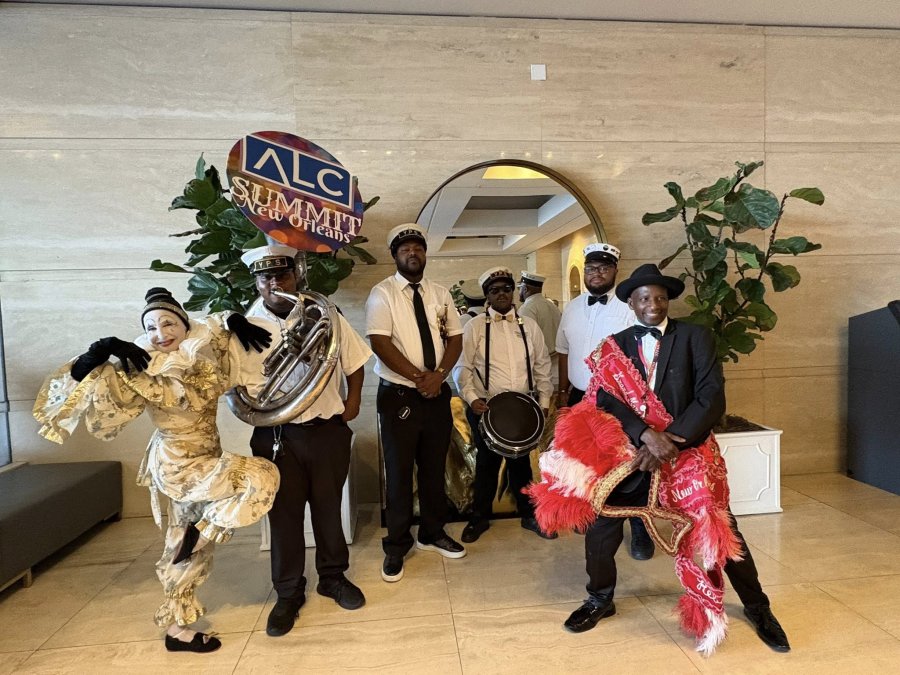
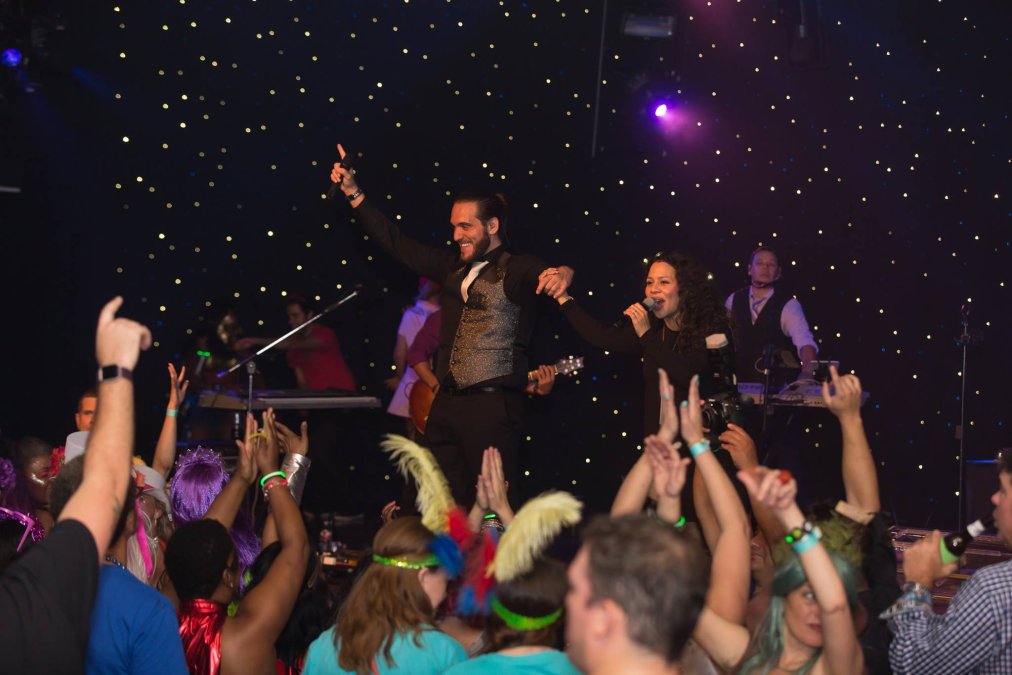
Build a hands-on station where attendees use the product themselves, staffed by people who can answer real questions. Pair the demo with a live element, such as a brass band leading guests from registration to the reveal space, so movement becomes part of the experience. Contests, photo moments, and audience voting give people a reason to stay engaged and share.
Cultural and Thematic Concepts
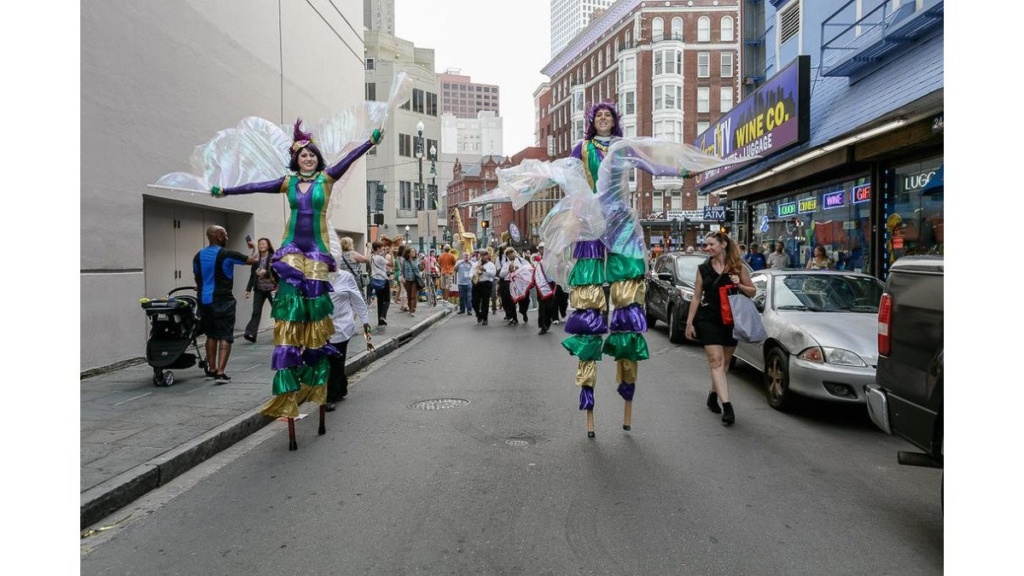
A strong theme gives every design decision a home. A New Orleans-inspired concept, for example, offers a natural visual and musical vocabulary: brass instrumentation, wrought-iron motifs, warm color palettes, and second-line parades that pull a crowd through a venue. The theme should connect to your product’s story, not sit beside it.
Your Product Launch Event Planning Checklist: From Concept to Execution
A product launch event planning checklist keeps a complex project from collapsing under its own details. Work through these stages in order, and assign one owner to each.
Phase 1: Strategy and Objectives
- Define launch objectives and measurable success criteria (attendance target, qualified leads, demo completions, post-event meetings booked)
- Identify the target audience and what they need to see, hear, and touch
- Confirm the event concept aligns with brand identity and the product story
Phase 2: Concept, Venue, and Date
- Select the venue or virtual platform and confirm capacity, load-in access, power, and network reliability
- Lock the event date and build the working timeline backward from launch day
- Confirm accessibility requirements: step-free routes, accessible restrooms, clear sightlines, captioning for streamed content, and dietary accommodation
Phase 3: Creative and Production
- Build the visual identity and environmental design package (see the brand-system toolkit below)
- Design the attendee experience and event program, including interactive stations and movement between spaces
- Contract production, entertainment, and decor vendors against a one-page brand system
Phase 4: Promotion and Anticipation
- Build the teaser campaign: save-the-date, countdown, and a reveal moment that pays off the teaser
- Coordinate invitations, landing page, social content, and email sequence so the visual language matches the room
- Brief internal teams, sales, support, PR, on the narrative and the follow-up plan
Phase 5: Post-Event Follow-Up
- Send thank-you and recap communications within 48 hours while attention is high
- Route qualified leads to sales with context on what they saw and asked about
- Publish post-event reporting that connects attendance and engagement to pipeline and revenue
Timeline and Milestones
Give yourself a working timeline measured in months, not weeks. Lock concept and venue first, then move into creative development and vendor contracting, then promotion, and finally rehearsals and logistics confirmation. Reserve the final two weeks for run-of-show rehearsals, contingency drills, and a full walkthrough with the accessibility checklist in hand.
Budget Allocation and Cost Trade-Offs
Budget is where most launch plans get honest. Rather than quoting figures that vary by city and scale, think in proportions and trade-offs.
At different budget levels, the trade-offs shift. A leaner launch usually protects the reveal moment and the demo experience while simplifying decor and entertainment. A larger launch can invest in custom environmental design, live performance, and multi-city or hybrid delivery.
The most common budgeting mistake is underfunding post-event follow-up. Teams spend heavily on the room and then let the leads go cold, which wastes the largest share of the investment. Reserve a defined slice of the budget for follow-up communications and sales enablement before you sign any production contract.
Risk, Contingency, and Launch-Day Operations
Every launch plan should name a single launch-day operations lead who owns the run of show and can make real-time calls. Build a one-page contingency sheet covering technical failure (backup laptop, offline demo video, spare audio cable), low attendance (consolidate rooms or shift to a smaller format), product-demo issues (a scripted fallback narrative), and delivery changes (a hybrid option if in-person becomes impossible).
Hand your creative team a one-page brand system before any vendor is contracted: colors, fonts, logo rules, tone of voice, and three words describing the feeling you want. Vendors who receive that page produce work that fits. Vendors who don’t produce work you have to redo.
Designing a Product Launch Event Agenda for Maximum Impact
A product launch event agenda should follow a deliberate emotional arc: arrival, anticipation, reveal, engagement, and departure, each with its own timing and sensory cues.
Start with a 30-to-45-minute welcome window with ambient music and clear wayfinding. Move into a short opening that frames the problem your product solves.
Vary the energy. A single keynote followed by a reception is a flat line.
Event Branding Best Practices for a Consistent Experience
Event branding best practices come down to one principle: every touchpoint should reinforce the same idea. Consistency separates a branded event from a decorated one.
Visual Identity and Environmental Design
Build a visual system before anything else: a defined color palette, typography, logo treatment, and environmental design rules covering event signage, stage design, table settings, and lighting. Environmental design is where guests physically experience the brand. A projection, a printed program, and a stage backdrop should all read as one family of choices.
Integrated Omnichannel Brand Consistency
The event does not end at the venue door. Your teaser campaign, social countdown, pre-event emails, on-site experience, livestream, follow-up, and post-launch reporting should all use the same visual language and core message. When an attendee sees the same identity in the invitation, on the stage, and in the follow-up email, recognition compounds.
Measuring Success: Metrics and Post-Event Reporting
Measurement should be defined before the event, not reconstructed afterward. Tie every metric to a business outcome your leadership already cares about, and write the measurement plan into the planning checklist so data collection is built into registration, on-site flow, and follow-up.
Build the Measurement Plan Before the Event
A measurement plan has three parts: the business outcome, the event behavior that signals progress toward it, and the data source that captures it. If the business outcome is qualified pipeline, the event behavior is demo participation plus a follow-up meeting request, and the data source is the registration system paired with the sales CRM. Decide these pairings during planning, not after the room clears.
Pre-Event, On-Site, and Post-Event Metrics
| Phase | Metric Category | What to Track | Why It Matters |
|---|---|---|---|
| Pre-event | Reach and intent | Landing page visits, RSVPs, waitlist joins, teaser engagement | Shows whether the narrative is pulling the right audience |
| On-site | Attendance | Registered vs. actual turnout | Validates audience targeting |
| On-site | Engagement | Demo participation, session dwell time, interactive station completion | Shows whether the program held attention |
| On-site | Lead generation | Qualified contacts captured, meeting requests | Feeds the sales pipeline |
| Post-event | Conversion | Post-event meetings, trials, purchases | Ties the event to revenue |
| Post-event | Brand awareness | Social sharing, earned mentions, share of voice | Measures reach beyond the room |
| Post-event | Attendee feedback | On-site surveys, follow-up interviews | Explains the numbers |
Attribution and Reporting Logic
Event attribution is rarely clean, so be explicit about how you will count. A common pattern is to credit the event when a lead’s first meaningful touchpoint is the launch and a meeting is booked within a defined window afterward.
Post-event reporting should connect the event to pipeline and sales conversations, not just attendance. Social sharing volume and content reach are useful secondary signals but should not replace outcome metrics.
Accessibility and Inclusion in Measurement
Accessibility and inclusion belong in this framework too. Captioning, clear sightlines, accessible seating, and dietary accommodation are not extras; they determine whether a meaningful share of your audience can participate at all. Track accommodations requested versus delivered, and ask in the post-event survey whether attendees could fully participate. That data tells you whether the event was inclusive in practice, not just in intent.
Define the measurement plan before the event, report both first-touch and any-touch attribution, and include accessibility participation data. A launch that cannot show its business impact will not get funded twice.
Conclusion: Elevate Your Next Product Launch with Strategic Event Branding
The hardest part of a launch is making the product feel inevitable, and that work happens long before the reveal. If you want a room people remember, partner with a production team that understands both brand and atmosphere. New Orleans Music Events brings 40 years of experience, full-service event production covering music, entertainment, decor, and technical management, and custom branding services that weave your identity into the experience rather than stamping it on top.
Get started with New Orleans Music Events and build a launch your audience talks about long after the lights go down.
Frequently Asked Questions
How do you brand a product launch event?
Start by defining your event objectives and target audience. Develop a brand narrative that ties into the product’s story, then create a visual identity with consistent colors, logos, and messaging. Integrate these elements into every touchpoint: invitations, signage, stage design, and digital promotions. Use event branding strategies to align the event concept with your brand identity, ensuring a cohesive experience that resonates with attendees and reinforces your market positioning.
What makes a product launch event memorable?
Memorable launches combine immersive experiences, interactive activities, and emotional connections. Incorporate unique elements like live performances, product demonstrations, and audience participation. Personalization and surprises, such as teaser campaigns or social media countdowns, build anticipation. Post-event follow-up with highlights and thank-you messages extends the impact. The key is to create a multisensory journey that attendees want to share, boosting brand awareness and engagement.
How do you create a consistent brand experience at an event?
Consistency requires a detailed brand system toolkit that covers visual identity, tone of voice, and messaging across all channels. Train staff and partners on brand guidelines, use environmental design to reinforce identity, and ensure digital touchpoints (event app, social media) mirror the on-site experience. Pre-event marketing, on-site signage, and post-event communications should all reflect the same brand narrative. This omnichannel approach builds trust and recognition.
What should be included in a product launch event planning checklist?
A comprehensive checklist includes defining objectives and success criteria, identifying the target audience, choosing a venue or virtual platform, setting the date and timeline, designing the attendee experience, creating a brand narrative, planning promotion and teaser campaigns, coordinating speakers and entertainment, arranging product demonstrations, and preparing post-event follow-up. Also include budget allocation, risk contingencies, and accessibility considerations. Use a phased approach: pre-event, event day, and post-event tasks.
How can you make a product launch event interactive?
Interactive elements like live polls, Q&A sessions, hands-on product demos, contests, and photo booths encourage audience participation. Incorporate social sharing by creating a custom hashtag and displaying user-generated content. Use gamification with prizes to drive engagement. For virtual events, leverage breakout rooms, chat features, and live streaming with real-time reactions. Interactive activities make attendees active participants, increasing retention and social reach.
How do you measure the success of a branded launch event?
Measure success by tracking metrics aligned with your event objectives: attendance, engagement rates (e.g., social media mentions, app interactions), lead generation, conversion rates, and attendee feedback through surveys. Post-event reporting should analyze these data points against success criteria. Also assess brand awareness lift via pre- and post-event surveys. Use insights to refine future event branding strategies and demonstrate ROI to stakeholders.
What are some creative product launch event ideas?
Consider immersive themed experiences, such as a cultural journey or interactive mystery, to make your launch stand out. Host a pop-up exhibition with augmented reality demos, or organize a live performance tied to your brand story. Other ideas include a behind-the-scenes documentary screening, a collaborative art installation, or a VIP influencer dinner. The goal is to create shareable moments that amplify your brand narrative and engage attendees emotionally.