Table of Contents
- Start with a Cultural Framework, Not a Venue List
- New Orleans Themed Corporate Event Ideas 2026
- Hiring Local Brass Bands for Corporate Events
- Culturally Immersive Corporate Event Planning
- Logistics, Permitting, and Vendor Management
- Off-Season vs. Peak Season: Timing Your Event
- Measuring Event ROI and Attendee Experience
- Conclusion: Bringing It All Together
- Frequently Asked Questions
Last Updated: October 4, 2026
Start with a Cultural Framework, Not a Venue List
Authentic corporate events in New Orleans start with culture, not a floor plan. At New Orleans Music Events, we have produced gatherings here for more than 40 years, and groups that book a room first and a theme second end up with a conference that could have happened anywhere.
The city rewards a different order: pick the cultural thread, then find the space that carries it.
The 5 C’s of Authentic Event Planning
Culture is the starting point.
Craft means hiring people who actually practice the tradition. A real brass band beats a playlist every time.
Calendar is about timing. Check the city’s festival schedule before you lock a date, because peak weekends change everything about cost and availability.
Capacity covers logistics. Match your venue to your headcount, load-in rules, and transportation plan.
Community is the payoff.
The 5 C’s are a filter, not a checklist. If a venue or vendor fails two or more of them, keep looking.
New Orleans Themed Corporate Event Ideas 2026
New Orleans themed corporate event ideas in 2026 work best when they borrow real traditions instead of the postcard version. Beads, masks, and a jazz playlist are the lazy version; the real version involves the people who keep these traditions alive. Formats that consistently land with corporate groups:
- Second-line parades with a brass band leading guests through the streets
- Courtyard receptions with local musicians and passed Creole dishes
- Cooking demonstrations built around gumbo, jambalaya, or pralines
Each one gives attendees something to do, not just something to watch.
Second-Line Parades and Brass Band Processionals
For corporate use, it works because it is short, mobile, and easy to schedule: a 15- to 30-minute procession can move guests between venues, turning a walk between buildings into the highlight of the day.
The catch is planning. You need permits, a route, and a band that knows how to lead a crowd safely. That is where local production experience pays off.
Culinary Experiences That Go Beyond Gumbo
Culinary experiences are where most corporate planners underinvest. A buffet of gumbo and red beans is fine. A live cooking station with a local chef explaining the dish is a memory.
Consider these formats:
- Chef-led stations for jambalaya, étouffée, or chargrilled oysters
- Praline and coffee tastings as a lighter afternoon option
- Creole vs. Cajun tastings that teach guests the difference
Food is also where cultural sensitivity matters. Ask local caterers how they want their dishes presented. They know what reads as respectful and what reads as a costume.
Hiring Local Brass Bands for Corporate Events
Hiring local brass bands for corporate events is the fastest way to make a conference feel like it belongs in New Orleans.
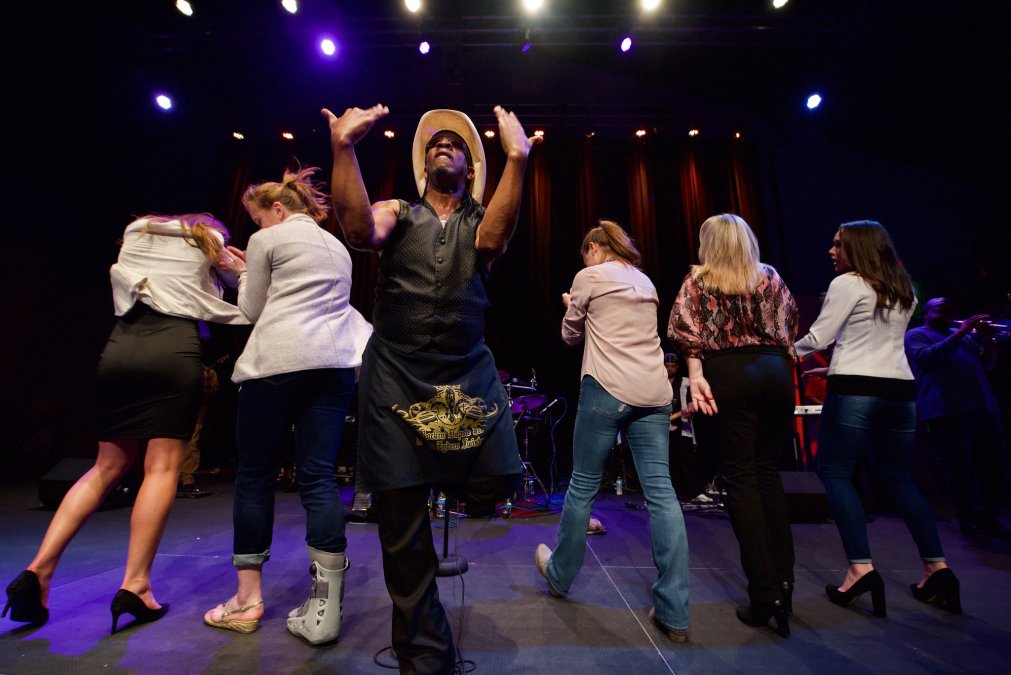
What most planners miss is that brass bands are not interchangeable, a band perfect for a second-line may not be right for a seated gala. Ask these questions before you book:
- How many players, and do they march or play seated?
- What is the amplification plan for your venue?
- Do they have experience with corporate audiences?
Get the answers in writing. Then confirm the band’s arrival time against your event timeline.
The most common mistake is booking a band without confirming the venue’s sound limits and load-in rules. Miss that step and your headline entertainment can be cut short on the night.
Culturally Immersive Corporate Event Planning
Culturally immersive corporate event planning means building the whole event around local traditions instead of bolting them on at the end.
That approach also solves a problem planners rarely name out loud: brand fit. A tech company does not need to become a hospitality brand to use this city well.
Custom branding can live inside the experience too. A brass band can carry your colors. A parade route can end at your product reveal.
Brief your performers on your brand voice before the event. A short call with the bandleader about tone, timing, and any product moments keeps the entertainment aligned with your message.
Logistics, Permitting, and Vendor Management
Logistics, permitting, and vendor management decide whether a great concept survives contact with the day. The French Quarter, Warehouse District, and Central Business District each carry their own constraints, none negotiable once a date is locked.
Most national planning guides stop at “check local rules.” Here is what the rules actually look like when you are moving a corporate group through this city.
Permitting: What You Actually File, and When
Any event that touches a public street, sidewalk, or park needs city approval before it happens. For corporate groups, the three most common permits are:
- Parade or procession permits for any second-line, brass band march, or walking route that uses public right-of-way. These are filed through the city’s Department of Safety and Permits and typically require a route map, start and end times, a certificate of insurance, and a named responsible party.
- Special event permits for gatherings that use public space, block traffic, or exceed a certain attendance threshold on private property open to the public.
- Noise and amplified sound approvals for outdoor music. The city enforces sound limits by district and by hour, and the French Quarter has stricter rules than most other neighborhoods.
Experienced local producers file parade and street-use requests 60 to 90 days out and treat anything inside 30 days as a rush. City review is not instant, and incomplete applications get sent back, restarting the clock.
Insurance, Union, and Venue Rules
Three requirements trip up out-of-market planners more than any others:
- Certificate of insurance (COI). Most venues and the city itself will ask for general liability coverage, and many will require the venue or the city to be named as an additional insured. Get your COI from your carrier early, it is a paperwork delay, not a negotiation.
- Union labor rules. Many larger venues and hotels operate under union agreements that govern load-in, load-out, rigging, and sometimes sound. That means your crew may not be allowed to touch certain equipment. Confirm in writing who does what before you build your production schedule.
- Load-in and load-out windows. Downtown venues often share alleys, freight elevators, and loading docks with other tenants. Your window may be narrow, and missing it can push your entire setup back.
Vendor Selection and Management
The authentic version of this city runs on small, relationship-driven vendors, bandleaders, chefs, florists, and production crews who book through personal networks, not booking platforms. That is the upside. The downside is that they are not built for corporate procurement timelines.
A working approach:
- Vet for corporate experience, not just talent. A brilliant brass band that has never played a seated corporate dinner is a risk. Ask for two references from comparable events.
- Assign one point of contact per vendor. One name, one phone number, one email. Group threads lose details.
- Confirm everything in writing. Arrival time, set length, load-in window, sound limits, dress code, payment terms, and cancellation policy.
The most common failure point is assuming a vendor’s verbal confirmation is a booking. In this market, top local talent books 6 to 9 months out for peak dates. Get a signed agreement and a deposit receipt before you stop sourcing.
| Planning Task | When to Do It | Why It Matters |
|---|---|---|
| Check festival calendar | 9-12 months out | Peak weekends drive up cost and cut availability |
| File parade and street-use permits | 60-90 days out | City review takes time; incomplete filings restart the clock |
| Confirm union load-in rules | 60 days out | Affects your setup schedule and crew plan |
| Secure COI with additional insured | 45-60 days out | Paperwork delay, not a negotiation |
| Book band and caterer | 6-9 months out | Top local talent books early |
| Final vendor walkthrough | 1-2 weeks out | Catches gaps before the event |
Off-Season vs. Peak Season: Timing Your Event
Timing is the single biggest lever on your event budget and attendee experience, and almost no national planning guide addresses it for this market. The city’s cultural calendar drives demand, and demand drives hotel rates, venue availability, vendor attention, and even how pleasant your guests’ commute between sites will be.
What Counts as Peak
Peak periods here are not defined by summer tourism. They are defined by the festival and convention calendar. The heaviest demand windows typically include:
- Mardi Gras season, which runs for roughly two weeks leading up to Fat Tuesday and fills hotels across the metro area
- Jazz Fest, which spans two consecutive weekends in late April and early May
- Essence Festival, typically over the July 4th weekend (Ultimate Guide to ESSENCE Fest 2026 in New Orleans)
If your event lands on any of these, book early and expect less flexibility on venue holds, band availability, and room blocks.
What Counts as Off-Season
The softer windows are where smart corporate planners do their best work:
- Late January through early February (after the holidays, before Mardi Gras)
- Late May through June (after Jazz Fest, before the summer convention crush)
- August through early September (hot and humid, but the calmest hotel and venue market of the year)
The trade-off is weather: summer brings heat, humidity, and afternoon thunderstorms, so outdoor components need shade, hydration, and a rain plan. For groups willing to work around that, the payoff is better venue selection, more vendor availability, and a calmer experience of the city.
How to Decide
Ask three questions before you lock a date:
- Does the event need to align with a festival? If yes, accept peak pricing and book 9-12 months out. If no, move off the peak weekends.
- Is the event indoors or outdoors? Outdoor programming in summer needs contingency planning; outdoor programming in peak season needs permits filed earlier because competition for street use is higher.
- What matters more, energy or attention? Peak weekends deliver atmosphere but split vendor attention. Off-season delivers focus and flexibility.
If your group is flexible on dates, ask venues and bands for their softest weeks before you commit. Many will share them, and that single question often reshapes the whole budget conversation.
A simple rule: if your event does not need to align with a festival, avoid the peak weekends. You will get better pricing, better vendor attention, and a smoother run.
Measuring Event ROI and Attendee Experience
Event ROI is easier to track than most planners think. You just have to decide what you are measuring before the event, not after.
Pick two or three metrics and commit to them:
- Attendee satisfaction through a short post-event survey
- Engagement through session attendance and activity participation
- Pipeline impact through leads, meetings, or demo requests
The cultural elements should show up in these numbers. If the second-line parade is the most-mentioned moment in your survey, that tells you where to invest next time.
Corporate groups of 200 to 2,000 attendees who want a culturally rooted event and are willing to plan 6 to 12 months ahead.
Conclusion: Bringing It All Together
The hardest part of planning authentic corporate events is resisting the urge to treat culture as decoration.
New Orleans Music Events has spent more than 40 years producing live music, brass bands, parades, decor, and full event production in this city.
Get started with New Orleans Music Events and give your guests an experience they will talk about long after they fly home.
Frequently Asked Questions
What defines an authentic corporate event experience?
An authentic corporate event experience goes beyond surface-level theming. It means weaving local culture into the event’s core: hiring musicians who live and work in the community, serving food that reflects the region’s culinary traditions, and respecting the history of the spaces you use. Authenticity comes from genuine partnerships with local vendors and performers, not from decorations alone. When attendees feel they’ve experienced something real, not staged, that’s when the event resonates.
How do you incorporate local culture into corporate event planning?
Start by identifying the elements that make a destination unique: its music, food, art, and history. Then find ways to integrate those elements into your event’s structure. For example, a second-line parade can replace a standard cocktail hour, or a local chef can design a menu that tells a story. Work with destination management companies or local event producers who have deep community ties. They can connect you with authentic performers and vendors who deliver more than a generic experience.
What are the best practices for hiring local entertainment for corporate events?
Book early, especially during peak seasons like Mardi Gras and festival weekends. Request performance videos and references from similar corporate events. Confirm that the group can handle your event’s size and technical requirements, including sound and staging. Discuss union regulations if your venue requires them. Always have a backup plan for weather or scheduling conflicts.
How can event planners ensure cultural respect when hosting in historic districts?
Respect starts with education. Learn about the history and significance of the neighborhood you’re using. Avoid appropriating cultural symbols without context. Work with local historians or community leaders to understand what’s appropriate. Follow all permitting rules, especially for noise, traffic, and public space use. Hire local staff and vendors who can speak to the area’s heritage. When attendees see that you’ve taken time to understand the culture, they engage more meaningfully and the community benefits too.