
Table of Contents
- Building Your 2026 Corporate Event Production Framework
- Event Production Timeline: From Concept to Load-Out
- Corporate Event AV Checklist: Technical Requirements and Equipment
- Event Run of Show Template: Structuring the Production Schedule
- Event Risk Management Plan: Contingency Planning and Compliance
- Vendor Management and Supplier Coordination for Production
- Post-Event Evaluation, ROI Reporting, and Production Debrief
- Conclusion: Executing Your Production Checklist with Confidence
- Frequently Asked Questions
Last Updated: October 12, 2026
Building Your 2026 Corporate Event Production Framework
A corporate event production management checklist in 2026 succeeds or fails long before load-in day. At New Orleans Music Events, four decades of producing large-scale gatherings has taught us that the framework matters more than the flash.

The most common mistake is treating production as a vendor problem to solve late: teams lock the venue, sign catering, then hand a production company a vague brief three weeks out.
Event Goals, Objectives, and Target Audience Definition
Start with the outcome, not the agenda. A product launch, convention, and recognition gala need different production intensities even at identical headcounts.
Event goals describe the destination; event objectives describe measurable steps.
Define the target audience with the same precision. Expected attendance drives room size, audio coverage, registration throughput, and staffing ratios. A 200-person retreat and a 2,000-person convention share almost no production assumptions.
Write your goal, objective, and attendance estimate on a single page before contacting a single vendor. Every production decision downstream should trace back to that page.
Budget Allocation and Expense Tracking Structure
Budget structure determines what you can actually produce. Split the total into fixed costs (venue, core AV, insurance) and variable costs (catering headcount, décor quantities, entertainment hours).
Track expenses against a live document, not a spreadsheet emailed between three people. Assign one owner per cost category and require weekly reconciliation.
Pricing for entertainment, décor, and production services depends on scope, dates, and venue requirements.
Event Safety Alliance guidance on production planning
Event Production Timeline: From Concept to Load-Out
An event production timeline works backward from the show date, not forward from today. Most planners build it the wrong direction, which is why the final two weeks always feel like a crisis.
A workable sequence looks like this:
- Lock the concept, goals, and budget envelope
- Secure the venue and confirm its technical capacity
- Contract entertainment, speakers, and catering
- Finalize the technical plan and equipment list
- Publish the run of show and staffing assignments
- Run a full production walkthrough on site
- Execute load-in, show, and load-out
Each stage depends on the one before it. Skipping the venue capacity check to book a headline act early is a classic error that costs real money when the room cannot support the rig.
Date Selection, Venue Requirements, and Planning Schedule
Date selection is a production decision, not a calendar decision. Check competing industry events, hotel availability, and venue booking windows before committing.
Venue requirements to verify in writing include ceiling height, rigging points, power capacity, load-in door dimensions, freight elevator access, and union labor rules.
Build the planning schedule with named owners and dates. A schedule without an owner is a wish list.
| Phase | Typical Lead Time | Owner |
|---|---|---|
| Concept and budget lock | 9-12 months out | Event lead |
| Venue contract signed | 8-10 months out | Event lead |
| Entertainment and speakers booked | 6-8 months out | Programming lead |
| Technical plan finalized | 3-4 months out | Production manager |
| Run of show published | 4-6 weeks out | Production manager |
| On-site walkthrough | 1-2 weeks out | Full team |
Corporate Event AV Checklist: Technical Requirements and Equipment
A corporate event AV checklist should be a numbered document your technical lead signs off on, not a mental list. Audio-visual failure is the fastest way to lose an audience, and it is almost always preventable. Every line item should name a quantity, a standard, or a verification method.
Audio Systems
- Microphone inventory: Count every presenter, panelist, and moderator. Add two spare handhelds and one spare lavalier per 10 presenters. Confirm wireless frequency coordination if the venue or nearby events use shared spectrum.
- Sound reinforcement: Match speaker coverage to room dimensions and ceiling height. For a 10,000-square-foot ballroom with a 16-foot ceiling, a distributed speaker system often outperforms a single stacked array for speech intelligibility. Request a coverage prediction from your AV vendor.
- Mixing and monitoring: Confirm a digital console with scene recall, plus stage or in-ear monitors for presenters who need them. Record a multichannel feed for post-event content.
Video and Display
- Projection or LED wall: Calculate required brightness in lumens based on screen size and ambient light. For a 16:9 screen in a well-lit room, plan on a minimum of 50 lumens per square foot of screen area. LED walls avoid ambient-light washout but require rigging capacity and power.
- Resolution and aspect ratio: Standardize on 1920×1080 or 3840×2160 for playback. Confirm presentation files match the display’s native resolution to avoid letterboxing or scaling artifacts.
- Sightline testing: Walk the back row and extreme side seats. If a presenter’s head blocks the lower third of the screen, raise the screen or add a confidence monitor.
Lighting
- Positions and control: Confirm truss positions, rigging points, and a lighting console with DMX universes mapped to your fixture plot. For corporate general sessions, a front-wash of 5600K LED fixtures with 90+ CRI ensures skin tones and branded colors read accurately on camera.
- Power distribution: Calculate total amperage for lighting, AV, and catering equipment. Most ballrooms provide 20-amp circuits; a 200-person general session with stage wash, projection, and sound may require 60-100 amps of dedicated power. Request a power plan from the venue.
Communications and Control
- Comms system: A wired or wireless intercom linking stage manager, AV, lighting, and show caller. Test in the room with all positions active.
- Show control: A cue-based system (e.g., timecode or manual cue stack) tying audio, video, and lighting cues to the run of show. Document every cue number and assign a caller.
Hybrid and Streaming Requirements
For 2026, hybrid delivery is standard rather than optional. Plan camera positions (wide, tight, roaming), encoding (H.264 or H.265 at 1080p), and bandwidth testing as part of the technical requirements. Confirm at least 10 Mbps upload dedicated to streaming, separate from attendee Wi-Fi. Test the full streaming workflow end-to-end at least one week out, including captioning and audience interaction tools.
Accessibility
- Confirm assistive listening system availability and compatibility with venue hearing loops.
- Ensure captions display on all screens for pre-recorded and live content.
- Verify wheelchair-accessible sightlines and stage access.
Never accept a single point of failure on presenter audio. One dead handheld microphone in front of a keynote speaker is the mistake audiences remember, and a backup unit costs far less than the recovery.

Event Run of Show Template: Structuring the Production Schedule
An event run of show template is a minute-by-minute document assigning every cue, transition, and technical action to a named person. It is the single most useful artifact in production management.
Build it in columns: time, segment, duration, presenter, audio cue, lighting cue, video cue, and stage manager note. Distribute it to every vendor and internal stakeholder at least two weeks out.
Production Roles, Ownership, and Approval Workflows
Ambiguity kills execution. Every production element needs one owner and one approver, and they should not be the same person on critical items.
- Production manager: owns the run of show, technical plan, and on-site coordination
- Stage manager: owns cues during the show and communicates via comms
- Technical director: owns AV, lighting, and power
Set a change cutoff. After that point, changes route through the production manager only. This single rule prevents five people redirecting a vendor mid-show.
Event Risk Management Plan: Contingency Planning and Compliance
An event risk management plan names what can go wrong and what you will do about it. Contingency planning is not pessimism; it is the difference between a hiccup and a headline. For production managers, risk planning must go beyond weather and medical incidents to include technical failure, vendor compliance, and data privacy.
Risk Categories and Mitigation
- Weather and venue-access disruption: For outdoor elements, define a weather call schedule (e.g., 72-hour, 24-hour, and 2-hour checks) and a clear decision-maker. Identify indoor backup space and a load-in plan that works in rain.
- Key personnel absence: Name a backup for every critical role: production manager, stage manager, technical director, and vendor liaison. Cross-train at least one person on the run of show and comms system.
- Technical failure and equipment redundancy: Maintain a spare kit with extra microphones, cables, DI boxes, and a backup playback laptop. For LED walls, keep spare panels and a power supply. Document a streaming failover procedure.
Compliance and Permits
- Permits: Check local requirements for temporary structures, pyrotechnics, food service, and amplified sound. Many jurisdictions require a permit for tents over a certain size or open flames. Apply early; processing can take weeks.
- Insurance: Confirm insurance certificates from every vendor before load-in. Verify your own coverage meets the venue’s stated requirements, including general liability, workers’ compensation, and auto liability. Keep copies accessible on site, not in an email inbox.
- Union labor rules: If the venue uses union labor, confirm jurisdiction for rigging, electrical, and audio. Violating union rules can result in work stoppages and fines.
Data Privacy and Security
- Attendee data: If you collect registration data, ensure compliance with applicable privacy laws. Use encrypted registration platforms and limit access to personally identifiable information.
- Payment data: If you process payments on site, use PCI-compliant systems and never store credit card numbers.
- Network security: For hybrid events, use secure streaming platforms and require passwords for presenter and VIP sessions.
Accessibility Compliance
- Confirm ADA compliance for all public areas, including stage access, restrooms, and seating.
- Provide auxiliary aids and services upon request, such as sign language interpreters or real-time captioning.
- Ensure digital content (websites, apps) meets WCAG 2.1 AA standards.
FEMA emergency planning resources for large gatherings
Build a one-page contingency card for each critical role and print it. When something fails on show day, people do not read a 40-page plan. They read the card in their pocket.
Vendor Management and Supplier Coordination for Production
Vendor management is where most production plans quietly fall apart. Supplier coordination requires a single point of contact per vendor, a shared schedule, and written confirmation of every commitment.
Send every vendor the same load-in window, site contact, and run of show. Require written confirmation of arrival times, equipment lists, and staffing counts. Keep a master vendor tracker with contract, insurance, and payment milestones visible to your whole team.
Entertainment, Speakers, and Catering Logistics
Entertainment and speakers need green room space, soundcheck windows, and a clear point of contact. Catering needs power, water access, and a service timeline matching your program breaks. These rarely coordinate themselves, so assign one person to own the intersection.
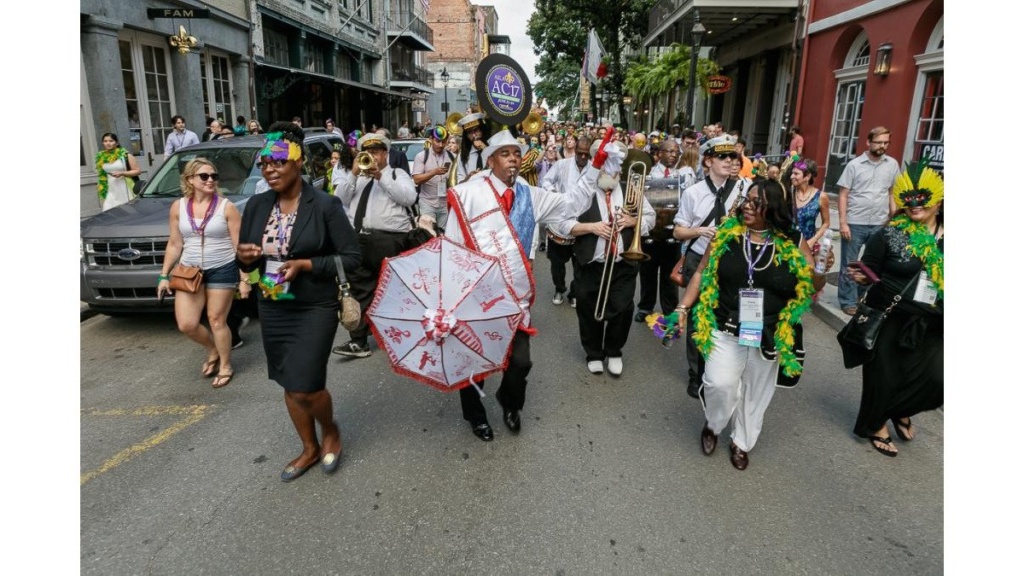
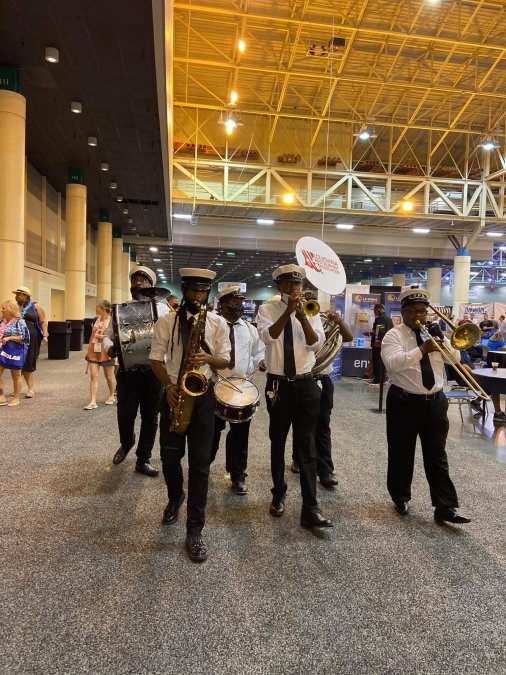
For culturally immersive programming, bring your production partner in early. Custom branding integration works best planned alongside the production design rather than applied afterward.
Post-Event Evaluation, ROI Reporting, and Production Debrief
Post-event evaluation converts one event’s lessons into the next event’s advantage. Run the debrief within two weeks, while memory is accurate.
Collect attendee feedback through a short survey, then compare it against your stated objectives. Pull attendance against expected attendance.
Hold a production debrief with every vendor and internal owner. Ask three questions: what worked, what failed, and what would you change.
| Debrief Question | Who Answers | Output |
|---|---|---|
| Did we hit the stated objective? | Event lead | ROI report |
| Which technical cues failed? | Technical director | Equipment notes |
| Where did the schedule slip? | Production manager | Timeline revision |
| What did attendees value most? | Marketing lead | Programming input |
Conclusion: Executing Your Production Checklist with Confidence
The gap between a competent event and an unforgettable one is almost never budget. It is preparation, ownership, and a production partner who has done it before.
New Orleans Music Events brings more than 40 years of production experience, full-service event production spanning music, entertainment, décor, and technical management, and custom branding integration that weaves your identity into the experience itself.
Get started with New Orleans Music Events and deliver a corporate event your attendees talk about long after load-out.
Frequently Asked Questions
What should a corporate event production checklist include?
A complete corporate event production checklist covers event goals, budget tracking, venue selection, vendor coordination, technical requirements, and risk management. It should also include a detailed event production timeline, an event run of show template, a corporate event AV checklist, and an event risk management plan. For large-scale events, add production roles and approval workflows so every team member knows their responsibilities from load-in through load-out.
How far in advance should you start planning a corporate event?
For large corporate events with 500 or more attendees, start production planning 9 to 12 months ahead. Venue selection and vendor contracts should be locked in by the 6-month mark. The event production timeline should have a detailed planning schedule for the final 90 days, with weekly checkpoints. For smaller gatherings under 200 people, 4 to 6 months is usually sufficient, though popular venues and entertainment acts book early.
How do you create a production schedule for a corporate event?
Build your production schedule backward from doors-open time. Start with the event run of show template, then work backward through rehearsals, sound checks, vendor load-in, and setup. Assign clear ownership for each task and set approval deadlines. Include buffer time between major milestones. Share the schedule with all vendors and internal stakeholders at least two weeks before the event, and hold a final walkthrough the day before.
How do you coordinate AV, staging, lighting, and entertainment?
Start with a corporate event AV checklist that maps every technical requirement to a specific venue location. Schedule a site visit with your AV team, staging crew, and entertainment providers together so they can resolve power, rigging, and space conflicts before load-in. Assign one production manager to own the master schedule. Confirm all equipment lists in writing and run a full technical rehearsal with entertainment acts before the event day.
What should an event team check before doors open?
Before doors open, run through your event run of show template one final time. Check that all audio-visual equipment is tested and working, staging is secure, lighting cues are programmed, and entertainment acts have completed sound checks. Confirm registration desks are staffed, signage is in place, and catering is ready. Review your event risk management plan with the on-site team, confirm emergency exits are clear, and make sure every vendor has a direct contact for last-minute issues.
What is the difference between event planning and event production?
Event planning covers the overall strategy: goals, budget, venue, guest list, and marketing. Event production focuses on the technical and operational execution: staging, audio-visual equipment, lighting, entertainment coordination, run of show, and on-site production management. A corporate event production management checklist bridges both, ensuring the creative vision translates into a seamless attendee experience from load-in through load-out.