Table of Contents
- Why Custom Event Decor Drives Brand Activation Results
- Experiential Marketing Decor Ideas That Get Guests Involved
- Custom Fabrication for Events: From Concept to Installation
- Best Practices for Event Branding That Feels Authentic
- Planning Timeline and Production Workflow
- Budget Drivers, Rental vs. Custom, and Measuring Activation Performance
- Frequently Asked Questions
Last Updated: October 9, 2026
Why Custom Event Decor Drives Brand Activation Results
Custom event decor for brand activations turns a rented room into a place guests remember. That is the whole job. When an attendee walks into a branded space and immediately understands who invited them and why, the decor has done its work before a single conversation starts.
At New Orleans Music Events, we have spent more than 40 years producing immersive gatherings, and we have watched decor shift from background dressing to the centerpiece of the guest experience. A branded event lives or dies on whether people want to stay, take a photo, and tell someone about it afterward.
The mechanics are simple. Decor sets the visual frame, signage directs attention, and interactive elements give guests a reason to linger. Longer dwell time means more conversations, more social sharing, and more qualified leads walking out the door. That chain starts with the room itself.
Decor is not decoration. It is the first touchpoint in your activation funnel, and it shapes every interaction that follows.
Experiential Marketing Decor Ideas That Get Guests Involved
Experiential marketing decor ideas work best when they invite participation instead of just filling space. A backdrop nobody stands in front of is wasted money. The strongest installations give guests something to do, hold, or customize.
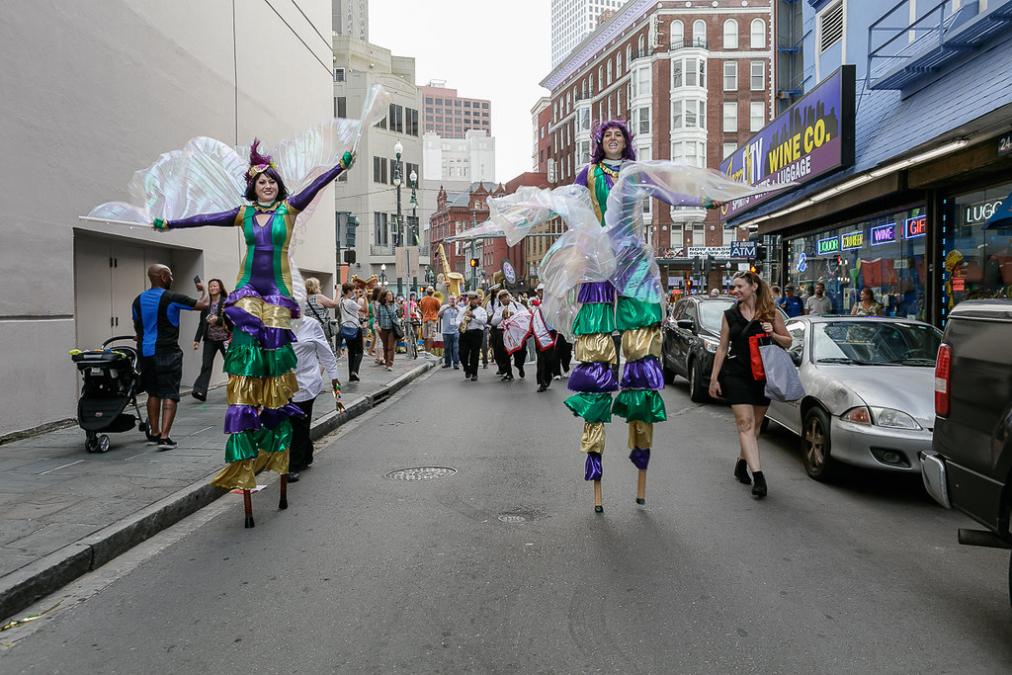
Photo Opportunities and Backdrops
Event backdrops and photo opportunities are the highest-return decor investment for most activations. A well-built backdrop does three jobs at once: it anchors the room visually, it carries your logo and brand colors, and it gives guests a reason to post.
Design the backdrop for the platform, not for the room. Vertical formats suit social sharing; wider formats suit group shots. Add branded props, a step-and-repeat pattern, or a sculptural display that echoes your product. The photo is the deliverable, so treat the backdrop as a set piece.
Interactive Stations and Personalization
Interactive experiences turn passive attendees into participants. Customization stations, engraving, patches, and charms all give guests something to take home that carries your brand on it.
A personalization station works because the guest invests effort. They choose the color, the engraving, the patch. That small act of creation builds a stronger memory than any giveaway handed out at a registration desk.
Staff every personalization station with one attendant who knows the equipment. Guests abandon a station fast when they have to figure out the process alone.
Custom Fabrication for Events: From Concept to Installation
Custom fabrication for events covers everything built specifically for your activation rather than pulled from a rental catalog. That includes branded structures, display shelving, custom bars, branded furniture, and sculptural pieces.
The process runs in four stages:
- Concept and design. Your team and the fabricator agree on dimensions, materials, brand colors, and logo application.
- Engineering and approval. Structural drawings confirm the piece is safe, buildable, and fits the venue’s load-in path.
- Fabrication and finishing. In-house printing, vinyl graphics, and paint bring the design to life.
- Installation and strike. The crew builds on site, handles union load-in rules, and removes everything afterward.
Signage and Large-Format Graphics
Signage and large-format graphics carry the message across the whole venue. Directional signage, tension fabric structures, fabric displays, and custom displays all fall into this category.
The mistake we see most often is treating signage as an afterthought, ordered late and sized wrong. Signage should be planned alongside the decor, because it shares the same visual language and the same production schedule.
| Fabrication Type | Best For | Lead Time Driver |
|---|---|---|
| Tension fabric structures | Large backdrops, brand walls | Print and frame size |
| Custom display shelving | Product launches, pop-ups | Material and finish |
| Branded furniture | Lounges, hospitality areas | Upholstery and build |
| Vinyl and large-format graphics | Signage, wayfinding | Venue approval |
| Sculptural displays | Photo moments, focal points | Design complexity |
Best Practices for Event Branding That Feels Authentic
Best practices for event branding start with restraint. Guests can tell when a logo has been pasted onto every surface, and it reads as noise rather than identity.
Weave your brand into the experience instead of stamping it on top. Use brand colors in the lighting and drapery, not just the signage. Let a custom bar carry your logo subtly on the front panel. Give the photo activation a prop that ties to your product story.
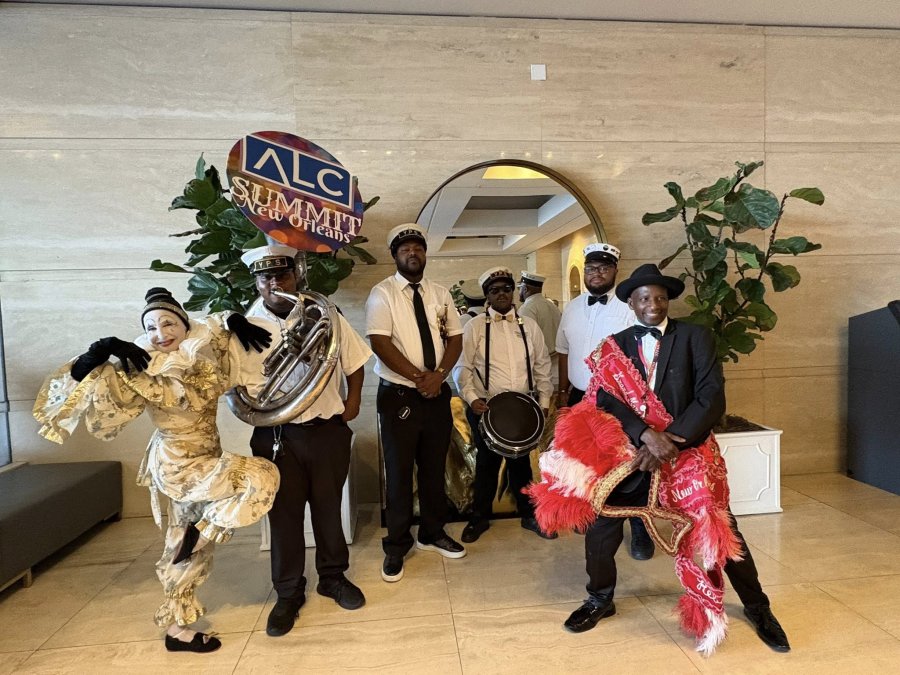
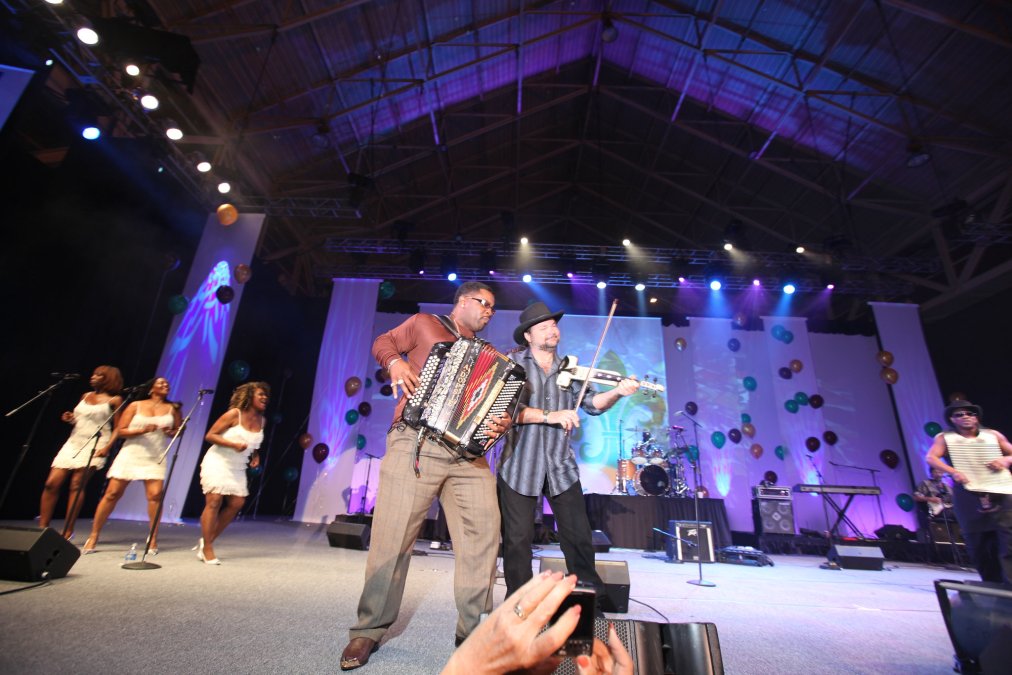
Authenticity also means local context. A culturally grounded activation gives guests something genuinely new, and that novelty is what they remember. The brand sits inside the experience rather than interrupting it. That is where Music, entertainment, parades, decor, event production can carry the room, live entertainment and a second-line parade turn decor into an experience guests move through, not just look at.
Skipping venue compliance checks before fabrication is the most expensive mistake in this process. Fire codes, load-in windows, and union rules can force a rebuild, and the cost lands on you.
Planning Timeline and Production Workflow
Most custom fabrication needs eight to twelve weeks from concept approval to installation, and complex builds with structural engineering or specialty finishes need longer. The timeline below is the sequence we use, but the important part is not the dates, it is the dependencies. Each stage unlocks the next, and skipping one pushes everything downstream.
12+ weeks out, Concept, budget, and venue requirements. Lock the creative direction, the rough budget range, and the venue’s rules before anyone draws anything. This is when you request the venue’s load-in window, rigging restrictions, fire-rating requirements, and union labor rules. Getting these late is the single most common cause of a rebuild.
10 weeks out, Design approval and materials. Approve drawings, materials, finishes, and logo application. Once materials are ordered, changes get expensive fast. Confirm at this stage whether the piece needs to be reusable, because that decision changes the joinery, the crating, and the finish.
6 to 8 weeks out, Fabrication and finishing. Printing, vinyl application, paint, upholstery, and assembly happen here. Ask for photo updates at the midpoint rather than waiting for a final reveal, catching a color mismatch at week seven is far cheaper than at week ten.
2 to 3 weeks out, Logistics, permits, and crew. Confirm the load-in schedule, dock access, freight dimensions, and crew call times. If the venue requires a certificate of insurance or a fire-marshal review, file it now, not the week of.
Event week, Install, test, and stage. Build on site, test every lit element and interactive station, and walk the guest path end to end before doors open. Strike is planned at the same time as install, not after.
The dependencies that actually break timelines
- Venue approval gates fabrication. If the venue has not signed off on rigging points or flame ratings, do not start building.
- Material lead times gate finishing. Specialty acrylics, custom metal, and printed textiles can add weeks on their own.
- Reuse decisions gate joinery. A piece built to travel needs different fasteners and crating than a one-off.
- Union rules gate install. Load-in windows and crew requirements are set by the venue, not by your schedule.
Skipping venue compliance checks before fabrication is the most expensive mistake in this process. Fire codes, load-in windows, and union rules can force a rebuild, and the cost lands on you.
Build in a buffer. Fabrication delays happen, and a buffer is cheaper than a rushed install.
Budget Drivers, Rental vs. Custom, and Measuring Activation Performance
Budget depends on size, materials, complexity, and whether you rent or build. Rental keeps upfront costs lower and suits one-off events with tight timelines. Custom fabrication costs more but delivers a piece you can reuse across a tour or a multi-city rollout, and reuse is where the math changes.
What actually drives the number
- Square footage and height. Bigger structures use more material, more crew, and more transport. Height adds engineering and rigging.
- Materials and finishes. Painted MDF is cheaper than metal or acrylic. Upholstery and specialty finishes add labor hours.
- Graphics and printing. Full-coverage vinyl costs more than spot graphics, and installation time scales with coverage.
- Installation complexity. Union labor, rigging, after-hours load-in, and dock access all add cost.
- Reuse engineering. A piece built to travel costs more up front and less per event.
Rental vs. custom: the real trade-off
Rental wins when you have one event, a tight timeline, and no storage. Custom wins when you have a tour, a multi-city rollout, or a recurring annual activation, because the same piece amortizes across every stop. The break-even point is usually the second or third use, once you factor in crating, storage, and refurbishment between events. If you are planning more than two activations with the same visual identity, custom is usually the better long-term decision.
Measuring whether the decor worked
Decor choices should connect to outcomes you can actually track. The metrics that matter most:
- Dwell time. How long guests stay in the branded zone. A backdrop or interactive station that pulls people in shows up here.
- Photo shares. Count posts tagged to your event or brand handle. A backdrop designed for the platform drives this directly.
- Interactions. How many guests used a personalization station, played a game, or engaged with a display.
- Lead capture. Scans, sign-ups, or badge taps tied to a specific activation zone.
- Conversion rate. The share of captured leads that move to the next stage.
Compare those numbers against your own goals, not against a generic benchmark. A photo backdrop that drives shares but no leads is a different result than a personalization station that drives leads but no shares, and both are useful, depending on what the activation was built to do.
The quiet budget win is reuse. A custom piece that travels to three events costs less per event than three separate rentals, and it keeps your visual identity consistent across every stop.
Frequently Asked Questions
What is the role of custom decor in a brand activation?
Custom event decor turns a generic venue into a branded environment guests remember. It carries your colors, logo, and messaging across backdrops, signage, furniture, and interactive stations so every touchpoint reinforces identity. Decor also creates photo moments that drive social sharing and gives guests reasons to stay longer. For corporate conferences and product launches, that combination raises brand awareness and makes the activation feel intentional rather than assembled from a catalog.
How do you measure the ROI of custom event decor?
Track dwell time at decorated zones, photo activation shares, lead scans, and post-event surveys. Compare conversion rates from guests who interacted with branded installations against those who did not. Social sharing volume and branded hashtag use offer another signal. Set targets before the event so you can attribute results to specific decor elements rather than the event as a whole.
How can custom branding be integrated into event installations?
Go beyond logo placement. Use brand colors in draped fabric, tension fabric structures, and vinyl graphics. Name interactive stations after product lines. Engrave guest gifts with your tagline. Coordinate lighting to match your palette. When decor, signage, and guest activities all echo the same visual language, the installation feels like your brand built the room, not rented it.
What should you consider when hiring a custom event production company?
Ask about in-house printing and fabrication capabilities, union load-in experience, and venue compliance knowledge. Request references from events similar in size and scope. Confirm who handles installation, teardown, and on-site problem-solving. A full-service partner manages decor, signage, and production under one contract, which reduces coordination risk and keeps your timeline on track.