Table of Contents
- Why Live Brass Bands Elevate Corporate Conferences
- Traditional Jazz Band vs Street Brass: Which Fits Your Conference?
- Brass Band Performance Duration for Conferences: What to Expect
- Best Practices for Booking Event Entertainment at Scale
- Budgeting and ROI: Justifying Live Entertainment to Finance
- Conference Logistics: Stage, Sound, and Load-In Coordination
- Frequently Asked Questions
Last Updated: September 30, 2026
Why Live Brass Bands Elevate Corporate Conferences
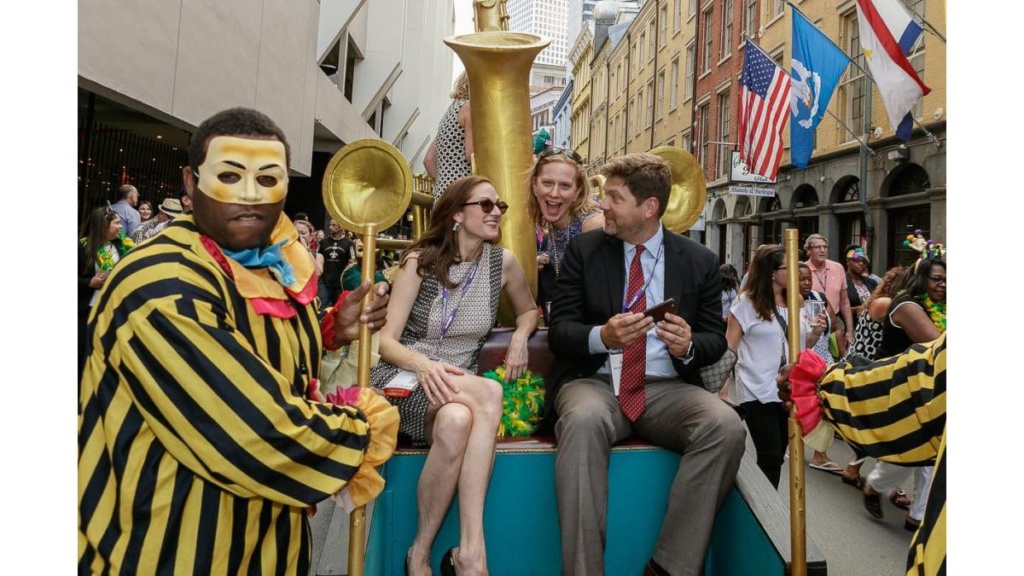
When you book brass bands for conferences, you’re not just filling a slot on the event schedule. You’re creating a memory. A live brass band transforms a standard corporate gathering into an experience attendees talk about long after the final session ends.
This guide from New Orleans Music Events draws on over 40 years of expertise in producing live entertainment for corporate conferences, brand activations, and galas.
The difference between a forgettable conference and one people remember often comes down to atmosphere. Live entertainment creates connection in ways recorded music simply cannot match.
Traditional Jazz Band vs Street Brass: Which Fits Your Conference?
The two main styles of brass band serve very different purposes at corporate events. Choosing the right one depends on your event’s tone, your audience, and what you want attendees to feel.
When to Choose Traditional Jazz for Convention Groups
Traditional jazz suits formal conference settings where professionalism matters. Convention groups often prefer this style because the uniformed appearance projects polish and tradition. If your event includes awards ceremonies, formal dinners, or VIP receptions, traditional jazz creates the right atmosphere.
When Street Brass Works Best for Brand Activations
Street brass brings energy and spontaneity to brand activations. Product launches and outdoor events benefit from this casual, high-energy approach. The informal style encourages audience participation and creates shareable moments.
Brass Band Performance Duration for Conferences: What to Expect
Brass band performance duration for conferences is rarely a single number. It is a schedule of blocks, each tied to a moment in your run of show. Most corporate events book ensembles for active performance, but the way that time is split matters more than the total.
- Arrival and registration (background): Low-dynamic, mid-tempo selections played at conversation volume while attendees check in and network.
- Featured stage set (foreground): High-energy, choreographed material timed to a keynote intro, awards moment, or sponsor reveal.
- Reception or after-party (mixed): Performance with breaks, rotating between seated listening and roaming, crowd-facing performance.
How Changeover and Setup Time Affects Your Run of Show
Active performance time is only part of the clock. A brass ensemble needs time before and after each block:
- Load-in and setup: 45-90 minutes for a six- to eight-piece group, including instrument staging, sound check, and uniform or wardrobe prep.
- Changeover between blocks: 10-20 minutes if the band moves from a lobby to a main stage.
- Load-out: 30-45 minutes after the final note.
Pacing Repertoire Across a Conference Day
A common mistake is treating every performance block the same. Conference audiences shift energy throughout the day. A set that works at an evening reception will overwhelm a 7:30 a.m. registration crowd.
Most experienced ensembles adjust in three ways:
- Volume and dynamics: Background blocks stay under conversation level; featured blocks open up.
- Tempo and song choice: Morning blocks lean on mid-tempo standards; evening blocks push faster, more percussive arrangements.
- Audience-facing vs. ambient: Featured sets include announcements, call-and-response, and stage presence; background sets stay unobtrusive.
Book your brass band for longer than you think you need. This buffer covers encore requests and schedule shifts without cutting the performance short. Confirm in the contract whether that buffer is billed or included.
Matching Duration to Audience Flow
Watch how attendees move through your venue. If the band is positioned along a registration corridor, longer background blocks keep energy steady as people arrive in waves. If the band is on a main stage, shorter, higher-impact sets hold attention better than a long continuous performance.
Best Practices for Booking Event Entertainment at Scale
Best practices for booking event entertainment start with early planning and clear communication. Large conferences require coordination between multiple vendors, venues, and stakeholders.
When contacting musical ensembles, provide:
- Event date, time, and location
- Expected audience size and demographics
- Performance duration and preferred style
- Any branding or theming requirements
- Stage and sound specifications
Contract Essentials and Musician Rider Requirements
Every booking should include a written contract covering performance details, payment terms, and cancellation policies. A musician rider specifies technical and hospitality requirements.
Key contract elements include:
- Performance date, time, and duration
- Total performance fee and payment schedule
- Cancellation and force majeure clauses
- Insurance and liability coverage
- Stage requirements and sound reinforcement needs
Skipping the contract review to save time often backfires. Without clear terms, you risk disputes over payment, performance length, or technical failures that leave your event without music.
Budgeting and ROI: Justifying Live Entertainment to Finance
Justifying live entertainment to finance teams requires framing music as an investment, not an expense. Live performance drives attendee engagement, brand recall, and overall event satisfaction.
Entertainment budget conversations go smoother when you connect spending to outcomes. Consider these angles:
- Attendee experience: Live music increases event satisfaction scores
- Brand differentiation: Authentic cultural performances set your event apart
- Social media value: Shareable moments extend your event’s reach
- Sponsor appeal: Quality entertainment attracts sponsors and partners
| Budget Factor | What It Covers | Questions to Ask |
|---|---|---|
| Performance fee | Musician compensation | How many musicians? How long? |
| Travel and lodging | Getting the band to your venue | Is travel included or separate? |
| Sound reinforcement | Audio equipment and technician | Who provides the PA system? |
| Custom arrangements | Branded or themed music | Is there an extra charge for custom work? |
| Production support | Stage setup and coordination | Does the fee include load-in and load-out? |
Conference Logistics: Stage, Sound, and Load-In Coordination
Conference logistics for live entertainment involve stage requirements, sound reinforcement, and load-in coordination, but the details differ sharply from a party or wedding. Conference venues come with in-house AV teams, strict load-in windows, and union or facility rules that can reshape your plan.
- A stage plot or floor plan showing available performance areas, power drops, and rigging points.
- The venue’s AV and sound policy, including whether outside audio equipment is permitted and whether an in-house engineer must run the board.
- Load-in and load-out windows, including dock access, freight elevator dimensions, and any noise curfews.
Stage Requirements for Brass Ensembles
Brass instruments project naturally, but the ensemble still needs room to play safely and be seen. A brass band typically needs a stage or riser with clear sightlines from the audience. Larger ensembles scale up from there.
Confirm these specifics with the venue:
- Power access: Amplifiers, monitors, and any electronic instruments need dedicated circuits near the stage.
- Weight and riser limits: Some hotel ballrooms restrict point loads on temporary staging.
- Ceiling height and rigging: Overhead mics or lighting may be limited in low-ceiling rooms.
- Acoustic character: Hard-surfaced ballrooms amplify brass; carpeted rooms absorb it. Ask the venue which they have.
Sound Reinforcement and AV Integration
For large conference halls, you will likely need a professional audio system and a sound engineer who understands live brass instrumentation.
Key questions for your AV team:
- Will the band use the venue’s house PA, or will the ensemble bring its own system?
- Who provides microphones, monitors, and cabling?
- Does the band need a separate monitor mix from the main room feed?
- How will the band’s performance integrate with recorded walk-in music, video playback, or a keynote microphone?
Load-In, Green Room, and Day-Of Coordination
Event production teams should coordinate with the venue and the band well before the event date. Share the run of show so everyone knows when the band performs and when they need stage access.
Plan for:
- Parking and equipment access: Brass players carry cases and stands; a loading dock or nearby entrance saves time.
- Green room or holding area: Musicians need a place to warm up, store cases, and rest between blocks.
- Meal and break provisions: Long conference days require scheduled breaks, especially for brass players.
- Weather contingency for outdoor venues: Heat, rain, and wind affect brass instruments and can force a move indoors.
Do not assume the venue’s AV team will handle everything. Confirm in writing who provides each piece of equipment and who runs it. Gaps between the band’s rider and the venue’s capabilities are the most common source of day-of delays.
Repertoire Customization for Professional Environments
One logistics detail that often gets overlooked is the setlist itself. Conference audiences respond differently than party crowds. Ask the band how they customize repertoire for professional environments.
Most ensembles can adapt in three ways:
- Background vs. featured sets: Lower-dynamic, instrumental arrangements for networking; higher-energy, recognizable selections for stage moments.
- Branded or themed arrangements: Custom intros, walk-on music, or sponsor-tied selections, usually confirmed in advance.
- Clean and appropriate content: Corporate audiences expect lyrics and banter suitable for a professional setting.
The best time to solve logistics problems is weeks before the event, not the morning of. Walk through every step with your vendors and venue contact, and put the agreed plan in writing.
Frequently Asked Questions
How much does it cost to hire a brass band for a conference?
Pricing for brass bands depends on the number of musicians, performance duration, travel requirements, and any custom branding or production needs. For a precise quote tailored to your conference size and venue, contact New Orleans Music Events directly with your event date and requirements.
What is the difference between street brass and traditional jazz bands for events?
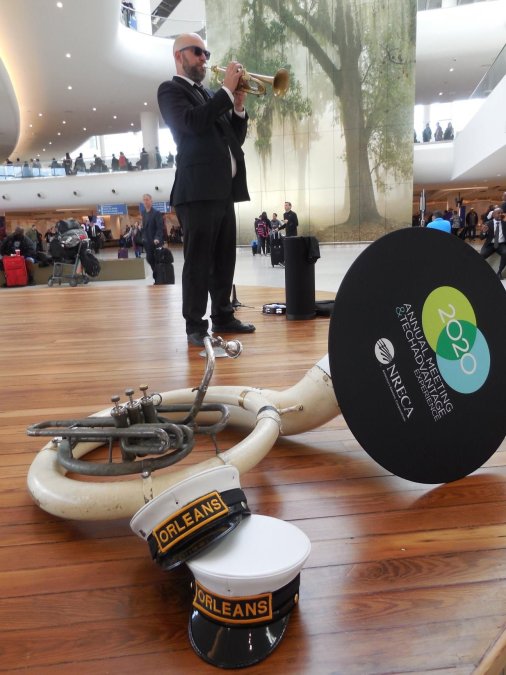
Street brass bands typically wear casual attire like t-shirts and perform high-energy, mobile sets that work well for brand activations and cocktail hours. Traditional jazz brass bands wear matching uniforms with captain’s hats featuring the band name, and they are commonly booked for funerals, convention groups, and formal galas. The choice depends on your event atmosphere and formality level.
How far in advance should I book a brass band for a large conference?
Book your brass band at least three to six months in advance. Large conventions often require multiple ensembles across venues, and popular bands fill their calendars quickly during peak event seasons. Early booking also gives you time for contract negotiation, repertoire customization, and coordinating stage requirements with your event production team.
Do traditional jazz brass bands provide their own sound equipment?
Most professional brass bands travel with basic sound reinforcement for smaller spaces, but large conference halls and ballrooms usually require additional audio-visual support. Confirm sound requirements during the booking inquiry and share your venue’s stage specifications and capacity. A full-service entertainment partner can coordinate sound reinforcement, microphones, and audio-visual requirements as part of event production.