
Last Updated: November 1, 2026
Quick Summary
Experiential marketing success is measured by linking each event to one specific business goal, then tracking a few KPIs such as attendance, dwell time, participation, qualified leads, and ROI. Compare results against a baseline, and report same-day return, 90-day attributed return, and cost per qualified lead to see the full picture.
- Write each goal as a specific, measurable objective with a number and timeframe.
- Choose three to five KPIs that directly test your stated goals.
- Track dwell time alongside attendance, since long stays signal real engagement.
- Include staffing and follow-up costs in ROI to avoid inflating results.
- Assign one owner per data source and build a one-page scorecard before the event.
Table of Contents
- Start With Campaign Goals and Objectives
- Choosing Experiential Marketing KPIs That Match Your Goals
- Tracking Attendance, Dwell Time and Participation
- Calculating Experiential Marketing ROI
- Experiential Marketing Measurement Tools for Live Events
- Experiential Marketing Case Studies From Large-Scale Activations
- Booking a Measurement Plan for Your Next New Orleans Event
- Frequently Asked Questions
Start With Campaign Goals and Objectives
Experiential marketing success starts long before the first guest walks through the door. Measuring a New Orleans activation without clear goals is like judging a parade without knowing its route. A useful measurement plan starts by asking one question: what should this event do for the business?
Goals usually fall into a few groups:
- Brand awareness: Did people learn who you are?
- Engagement: Did they stay, interact, and take part?
- Leads: Did they share contact details or sign up?
- Sales: Did the event move product or bookings?
Write each goal as a specific objective. “Build awareness” is vague. “Reach 1,500 attendees across three nights in the French Quarter” gives you something to measure.
Choosing Experiential Marketing KPIs That Match Your Goals
Once goals are set, pick key performance indicators (KPIs) that test them, since experiential marketing success depends on KPIs that link directly to a goal. A KPI that does not link to a goal is noise.
Common matches look like this:
| Goal | Example KPI | How to Capture It |
|---|---|---|
| Awareness | Event reach and impressions | Social listening and partner reports |
| Engagement | Participation rate | Staff counts and interactive stations |
| Leads | Qualified leads per event | Badge scans and sign-up forms |
| Sales | Cost per lead or conversion rate | Event-specific links or codes |
Keep the list short. Three to five KPIs per event is enough for most teams to act on.
Tracking Attendance, Dwell Time and Participation
Attendance tells you how many people came. Dwell time tells you how long they stayed, and for experiential marketing success that often matters more. A crowd that drifts through in five minutes has not engaged with the brand.
Practical ways to track these numbers include:
- Badge or wristband scans at entry points
- Short timed observations at key stations
- Interaction counts at photo spots or product demos
- Quick intercept surveys during the event
Staff with a tablet at the entrance can log arrivals in real time, which makes end-of-night reports far more accurate.
Calculating Experiential Marketing ROI
Return on investment compares what the event earned against what it cost, which is the clearest way to judge experiential marketing success. The basic formula is simple: (revenue or value gained minus cost) divided by cost, then multiplied by 100. The hard part is not the math, it is deciding what counts as revenue, what counts as cost, and how far forward in time you are willing to look.
Build the full cost base first
Most teams undercount event costs, which inflates ROI. Before you calculate anything, assemble a complete cost base that includes:
- Production and build: staging, sound, lighting, signage, fabrication, and venue build-out
- Talent and staffing: performers, brand ambassadors, event managers, security, and overtime
- Venue and permits: rental fees, insurance riders, and any city or parish permit costs
- Travel and logistics: crew travel, freight, storage, and load-in/load-out
- Marketing and promotion: paid social, print, influencer fees, and pre-event email
- Follow-up costs: lead nurture, sales team time, and post-event content production
A common pattern is for follow-up and staffing costs to be the two lines teams forget, which makes a break-even event look profitable on paper.
Attribute across the full funnel, not just the day of
Experiential work rarely produces a clean sale on the spot. Instead of relying only on immediate transactions, build a short attribution window and track three layers:
- Same-day signals: redemption codes printed on materials, event-specific landing pages, and QR codes that route to a tagged URL.
- Short-window conversions: sales, bookings, or sign-ups within a defined window after the event, often 30, 60, or 90 days depending on your sales cycle.
- Assisted conversions: deals where the event was one touch among several. Ask your sales team to log event attendance as a field in the CRM so it can be reported later.
Be honest about gaps. If a sale cannot be tied to the event, say so rather than inflating the number. Cost per lead and cost per qualified lead are often more reliable early measures than full ROI, especially for brand-awareness campaigns where revenue attribution is inherently fuzzy.
Adjust for local seasonal context
Attendance, engagement, and sales do not behave the same way year-round. Convention calendars, festival weekends, and seasonal visitor surges can lift raw numbers in ways that have little to do with your activation. When you interpret ROI, compare against a baseline, the same event in a quieter period, or a matched control group, rather than against zero. A strong number during a peak weekend may actually be underperformance relative to the traffic available.
Report ROI in three views: same-day return, 90-day attributed return, and cost per qualified lead. Each answers a different question for stakeholders, and together they prevent a single misleading headline number.
Experiential Marketing Measurement Tools for Live Events
A single reporting process matters more than any one tool, because consistent data makes results comparable. Rather than shopping by brand, map each tool to the KPI it serves and confirm the data can leave the tool and land in your CRM or dashboard.
Match tool categories to what you need to capture
- Access and attendance: badge scanners, wristband RFID, or a tablet-based check-in app for real-time arrival counts.
- Engagement and dwell: beacon or Wi-Fi analytics for zone-level dwell time, plus staff tally sheets for stations where sensors are impractical.
- Surveys and feedback: short intercept surveys on tablets and a post-event email survey sent within 48 hours while recall is fresh.
- Social and sentiment: social listening platforms and a saved hashtag or geofilter to capture user-generated content and mention volume.
- Web and conversion: event-specific landing pages with UTM-tagged links and analytics goals tied to sign-ups or bookings.
- CRM and pipeline: a CRM with a custom event-attendance field so leads and later conversions can be reported together.
Choose tools that can connect to your CRM so leads can move into the pipeline without manual re-entry.
Build a one-page scorecard and reporting cadence
A scorecard turns scattered tools into a repeatable process. Keep it to one page with a row per KPI and columns for target, actual, variance, and owner. A simple cadence looks like this:
- Pre-event: lock goals, KPIs, targets, and the attribution window; confirm data-capture responsibilities.
- Real-time: a daily or end-of-night snapshot of attendance, engagement counts, and lead volume so you can adjust staffing or flow.
- Post-event (within one week): a full scorecard with actuals versus targets and a short narrative on what drove variance.
- Post-window (30/60/90 days): attributed conversions and cost per qualified lead added to the same scorecard.
If a metric is not on the scorecard with an owner and a target, it will not get collected consistently. Assign one person per data source before the event begins.
Handle consent and data responsibly
Measurement involves personal data, so build consent into the capture process rather than bolting it on afterward:
- Surveys and lead forms: include a clear opt-in and a link to your privacy notice; do not pre-check consent boxes.
- Location and beacon data: disclose what is collected and offer an opt-out where feasible.
- Photo and video: post signage at entrances explaining that the event is being photographed or filmed, and honor requests to be excluded.
- Retention: set a retention period for attendee data and document who can access it.
These practices protect attendees and reduce the risk of a data-handling problem overshadowing an otherwise successful activation.
Experiential Marketing Case Studies From Large-Scale Activations
Case studies help you see what experiential marketing success looks like in practice. Look for activations with similar size, audience, and goals to yours. Pay attention to how the team defined success before the event, not just the headline numbers afterward.
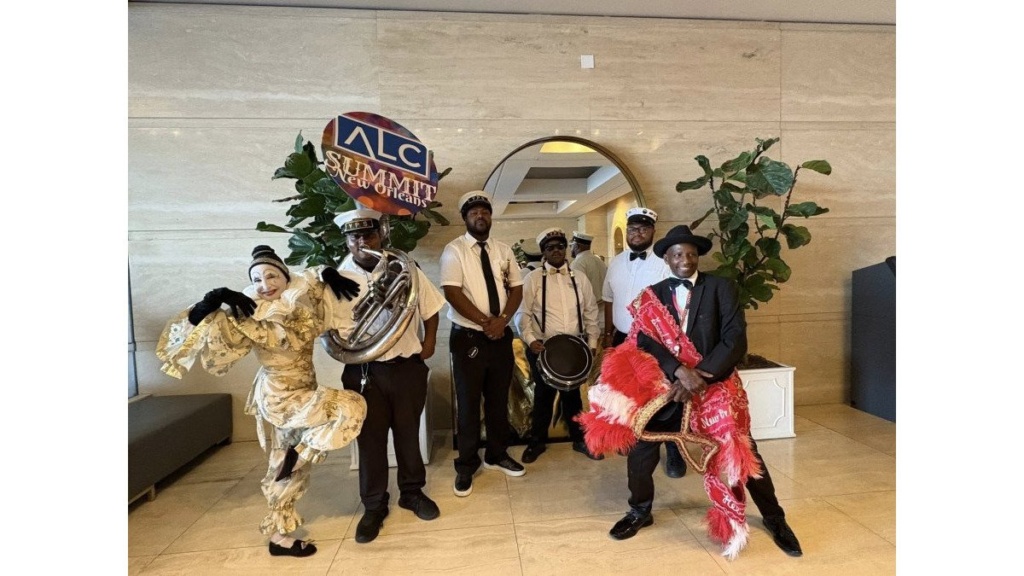
Our customers have included Ceramic Tiles of Italy, Budweiser, Harley-Davidson, the National Association of Realtors, and Popeye’s Fried Chicken. Ask us for references from events of comparable scope.
Booking a Measurement Plan for Your Next New Orleans Event
A strong measurement plan takes planning, and experiential marketing success is most likely when the people running the event understand the goals from day one. If you are planning a corporate activation or conference in New Orleans, learn about the team behind New Orleans Music Events and the experience our founder brings to local events. When you are ready to plan, review our full range of event services to see how we handle production, music, and entertainment, then reach out to request a measurement plan built around your goals.
For a step-by-step planning aid, our Corporate Event Production Management Checklist 2026 helps you organize goals and logistics before your event begins.
Frequently Asked Questions
How do you measure the success of experiential marketing?
Start by tying the event to two or three specific goals, such as brand awareness, qualified leads or sales. Then select a KPI for each goal, collect data before, during and after the event, and compare results against a baseline. Common signals include attendance, dwell time, social media engagement, sign-ups and attributed sales. Measurement works best when the plan is set before the event begins, so the data you need is captured on site rather than reconstructed later.
What KPIs should you track for an experiential marketing campaign?
Choose KPIs that match your objectives. For awareness, track reach, impressions and social mentions. For engagement, track participation rate, interactions and average dwell time. For conversion, track lead capture rate, cost per lead and attributed sales. Keep the list short, usually five or fewer KPIs, so the team can act on the results rather than collecting numbers that no one uses.
How do you calculate experiential marketing ROI?
A basic formula subtracts total campaign cost from the revenue attributed to the event, then divides by the cost. Attribution is the hard part: use event-specific links, unique redemption codes or tracked sign-up forms so revenue can be linked to the activation. Pricing for event production depends on quantity, dates, venue and delivery, so request a current quote from New Orleans Music Events to build your cost side accurately.
How can you track leads generated by an event activation?
Use a simple lead capture method at the event, such as a QR code linking to a short form, a tablet sign-up station or a badge scan. Tag each lead with the event name so it can be tracked through your CRM. Compare the number of qualified leads against total attendance to calculate a capture rate, and follow up within days while the event is still fresh.
Ready to make your next event measurable? New Orleans Music Events builds authentic, high-energy experiences with clear goals behind every detail. Get started with New Orleans Music Events and plan an activation that delivers results you can track.
