Table of Contents
- Why New Orleans Is a Top Choice for Corporate Conventions
- Venue Selection and Capacity Planning Near the Convention Center
- New Orleans Themed Corporate Event Ideas 2026
- Corporate Event Production Services: Audio-Visual and Technical Needs
- Managing Off-Site Event Transportation for Convention Groups
- Housing, Hotel Blocks, and Navigating Festival Dates
- Budgeting, Catering Coordination, and Local Ordinances
- Safety, Accessibility, and Sustainable Event Practices
- Frequently Asked Questions
Last Updated: September 27, 2026
Why New Orleans Is a Top Choice for Corporate Conventions
Walk through the Warehouse District on a Tuesday morning and you’ll see it: lanyards, name badges, and groups of colleagues moving between a convention center and a hotel ballroom. New Orleans has become one of the most requested destinations for convention event planning in the country, and the reason isn’t just the food or the music. It’s walkability, a dense concentration of meeting space, and a hospitality industry that treats large groups as its core business.
Venue Selection and Capacity Planning Near the Convention Center
Convention event planning capacity work is the process of matching your expected attendance, seating style, and staging needs to a space that can hold all three without crowding aisles or breaking fire code. In New Orleans, the calculation gets complicated fast because historic buildings rarely offer the clean rectangular footprints planners expect.
- Theater style: seats the most people, but leaves little room for meal service
- Banquet rounds: fewer seats, more floor space per guest
- Reception standing: highest headcount, lowest comfort for long programs
- Classroom or crescent rounds: best for breakout sessions and note-taking
Evaluating Space Configuration for Large Groups
Ask three questions of every venue: What is the certified occupancy for my specific setup? Where do load-in doors sit relative to the stage? And what does the room look like when the house lights are up at full brightness?
A common mistake is booking on square footage alone. A room can hold 1,000 people standing and still fail for a 600-person seated dinner once you add a stage, dance floor, and buffet lines. Always confirm occupancy for your exact configuration in writing.
New Orleans Themed Corporate Event Ideas 2026
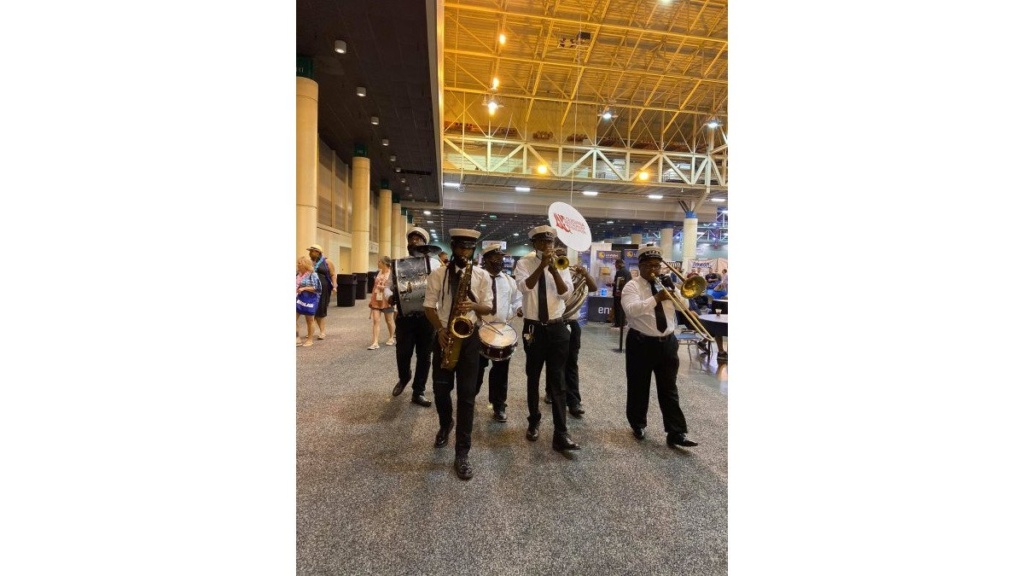
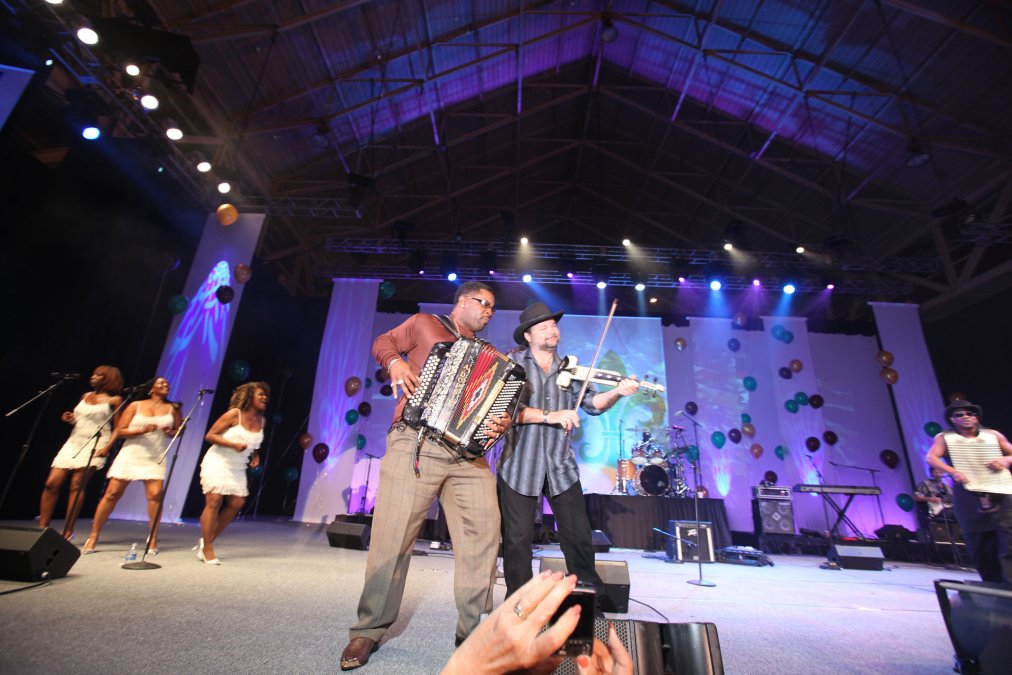
For 2026, the strongest corporate event ideas lean into local culture rather than decorating around it. Think second-line parades led by a brass band, a Sazerac tasting station staffed by a local bartender, or a Mardi Gras Indian presentation that explains the tradition instead of just borrowing the feathers.
Weave your brand into the experience itself rather than stamping a logo on it. Custom-branded step-and-repeat backdrops, branded second-line handkerchiefs, or a signature cocktail named for your product launch all land better than a banner behind a stage.
Corporate Event Production Services: Audio-Visual and Technical Needs
Corporate event production services cover the technical backbone of your gathering: audio-visual equipment, staging, lighting, power distribution, and the crew that keeps it all running. Book these early, because the best local crews get committed months ahead during peak convention season.
Your technical support checklist should include:
- Microphone redundancy for every presenter
- A dedicated A/V point of contact for the full event timeline
- Backup power for registration and check-in systems
- Clear signal flow documentation for hybrid events
Coordinating Load-In and Load-Out with Union Requirements
Load-in and load-out in New Orleans venues frequently involve union labor, and the rules differ by building. Some require union stagehands for rigging; others allow your vendor’s crew to work under a house contract.
Managing Off-Site Event Transportation for Convention Groups
Managing off-site event transportation for convention groups means moving hundreds of attendees between hotels, the convention center, and evening venues without stranding anyone or blowing your schedule. In a compact city with narrow streets, this is a logistics problem, not a fleet problem.
Guest transportation works best when you:
- Assign each hotel block its own shuttle loop and pickup window
- Build in buffer time for French Quarter traffic and street closures
- Staff each vehicle with a greeter who knows the evening’s run of show
- Publish a simple digital schedule attendees can check from their phones
| Group Size | Best Transport Option | Key Consideration |
|---|---|---|
| Under 50 | Chartered minibus | Flexible routing, easy staging |
| 50-200 | Multiple shuttle loops | Staggered pickup windows |
| 200-500 | Motorcoach fleet | Dedicated loading zone needed |
| 500+ | Fleet plus walking escorts | Police detail and permits |
Housing, Hotel Blocks, and Navigating Festival Dates
- Shoulder nights. Arrival and departure nights around a festival often sell out before the peak nights do. Ask each hotel to hold shoulder inventory separately so a single sold-out night doesn’t collapse the whole block.
- Attrition language. Standard contracts tie you to a percentage of the block you must fill or pay for. Push for a sliding scale that softens as the event date approaches, and ask what happens if a festival is announced or moved after you sign.
- Sub-blocks by attendee type. Split your block by role, speakers, sponsors, general attendees, so a slow sponsor pickup doesn’t trigger attrition on the entire room count.
- Walk-in overflow. Ask the hotel what its walk policy is and who covers relocation if the property oversells. Get the answer in writing before you sign.
Your event budget and your calendar are inseparable. A week that overlaps a major festival can sharply raise housing costs and limit your venue options. Lock dates and housing together.
Budgeting, Catering Coordination, and Local Ordinances
A realistic event budget in New Orleans accounts for more than venue rental and food. Permits, security, temporary structures, and noise ordinances all carry costs that generic planning templates miss.
Skipping the permit step is the fastest way to have a second-line parade shut down mid-route. Confirm sound, street, and vending permits before you promote the event to attendees.
Safety, Accessibility, and Sustainable Event Practices
Three areas separate a good convention from a great one, and most planners underinvest in all three. This is where a planner-first guide earns its keep, because generic templates rarely address historic venues, high-traffic tourist corridors, or corporate sustainability reporting.
Safety and Security Protocols
Start with a written plan that covers crowd flow, medical stations, and a clear chain of command for emergencies. Share it with venue staff and your production crew before load-in, not on event morning.
- Crowd flow at pinch points. Historic venues often have narrow corridors and single stairwells. Walk the route attendees will actually take and identify where a bottleneck could form.
- Medical coverage. Confirm where the nearest hospital is, whether the venue has an AED on site, and who is trained to use it.
- Chain of command. Name one person who can make the call to pause or evacuate, and make sure every vendor knows who that is.
- High-traffic corridors. If your event spills into a tourist area, coordinate with venue security and local authorities on a meeting point and a communication channel.
Accessibility and ADA Compliance
Accessibility is not a checkbox; it is a design constraint that should shape your venue selection. ADA National Network guidance outlines requirements for accessible seating, routes, and communication.
- Accessible seating with sightlines equivalent to general seating
- A continuous accessible route from entry to stage to restrooms
- Assistive listening or captioning for hybrid and recorded sessions
- Accessible transportation staging that matches your shuttle plan
Sustainable Event Practices
Sustainability is increasingly requested by corporate clients, and it is easier to build in than to retrofit. U.S. Environmental Protection Agency offers guidance on waste reduction and environmentally preferable purchasing.
- Waste diversion. Ask the venue and caterer what they can compost or recycle, and staff the bins so attendees use them correctly.
- Reusable over disposable. Reusable water stations and serviceware reduce landfill volume and often read as a premium touch.
- Local sourcing. Menus built around regional seafood and produce cut transport emissions and support the local economy.
- Post-event reporting. Collect the numbers your corporate clients need for their own ESG reporting, diversion rate, local spend, and transport mode.
Post-Event Attendee Engagement
Build your safety, accessibility, and sustainability checklists into the same document as your run of show. When they live in one place, they stop being afterthoughts and start being part of the plan.
Frequently Asked Questions
What are the key logistical considerations for hosting a convention near the Ernest N. Morial Convention Center?
Key logistics include booking hotel blocks early, especially during festival seasons like Mardi Gras and Jazz Fest. Plan for guest transportation via shuttles or rideshares, and coordinate load-in and load-out with union requirements. Verify venue capacity and space configuration for your group size. Also, review local ordinances for noise, alcohol, and permitting to avoid last-minute issues.
How can I incorporate authentic local culture into a professional corporate event?
Work with local vendors who specialize in New Orleans music, food, and decor. Hire a brass band for a second-line parade, offer local cuisine like gumbo or beignets, and use custom branding that reflects the city’s spirit. Ensure cultural elements align with your brand’s tone. A destination management company can help curate these experiences seamlessly.
What are the best practices for managing off-site transportation for large convention groups?
Book shuttle services in advance and provide clear schedules to attendees. Use multiple pickup points near hotels to reduce wait times. Account for traffic during peak festival dates. Designate a transportation coordinator to handle issues in real time. Consider accessibility needs and have contingency plans for delays.
How do I coordinate live music and entertainment for a corporate convention?
Hire local musicians and entertainers familiar with corporate audiences. Discuss technical requirements like audio-visual equipment and stage setup early. Ensure contracts specify performance times, load-in, and load-out. For a seamless experience, partner with a full-service production company that handles booking, sound, and logistics.
What are the essential steps for securing local vendors for a large-scale event?
Start by researching vendors with experience in large corporate events. Request proposals and check references. Confirm they carry proper insurance and licenses. Schedule site inspections and tastings. Finalize contracts with clear deliverables, timelines, and payment terms. Build in buffer time for setup and rehearsals.
How can I make my convention more sustainable?
Choose venues with recycling programs, reduce single-use plastics, and opt for digital materials instead of printed handouts. Source local and seasonal food to cut transport emissions. Encourage carpooling or shuttle services. Donate leftover food to local charities. Communicate sustainability goals to attendees to increase participation.
Planning a convention in a city this culturally rich takes more than a checklist; it takes a partner who knows the venues, the unions, and the calendar. New Orleans Music Events brings over 40 years of experience producing live music, brass bands, parades, decor, and full technical production, with custom branding that weaves your company into the experience rather than pasting it on top. Get started with New Orleans Music Events and give your attendees a convention they’ll actually talk about.